


Medically reviewed by Gordana Čižmek, dr. dent. med., spec. · Last updated: July 2026
- Retention keeps your teeth in the new position achieved once active orthodontic treatment ends.
- You can be fitted with a fixed retainer wire, a removable retainer foil, or both.
- Relapse is most likely in the first 12 months after the appliance is removed.
- Because teeth move throughout life, caring for your smile is a lifelong habit.
Retention, or caring for the position achieved by the teeth, is not separate from orthodontic treatment but an integral part of it. After the successful alignment of the teeth, a retainer wire and a retainer foil hold that position and reduce the likelihood of irregularities returning. Wearing your retainer regularly and following your orthodontist’s instructions is what makes a beautiful smile last.
Teeth move throughout life, so caring for a beautiful smile is a lifelong task.
Book a free Invisalign examination
What happens after the appliance is removed?
At the end of orthodontic treatment we photograph the patient and make a 3D scan of the dental arches to record the result achieved. We then discuss the most suitable way of maintaining it – retention. Two further visits follow, when we place a retainer wire on the inner side of the incisors and fit a retainer foil. Often we opt for retainer foils alone. We explain the protocol for wearing the foil and what to watch out for during the retention phase, and we arrange follow-up visits to monitor stability. The price of the retainer foil is not included in the price of orthodontic treatment.
Retainer wire – fixed retention
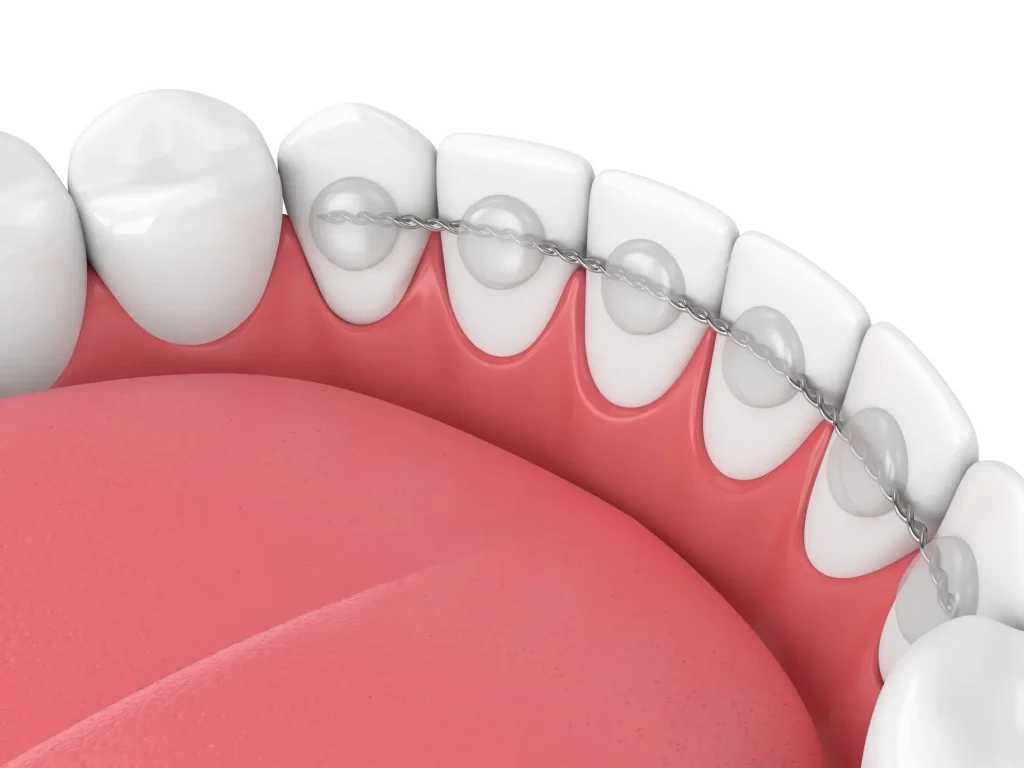
A retainer wire, or retention arch, is a thin metal wire attached to the inner side of the upper and lower front teeth. It prevents movement of the teeth in the visible area after final alignment. We bond it with filling material to the cleaned inner surfaces of the incisors, removing any plaque or tartar first.
The advantage of the retainer wire
The main advantage of the retainer wire is that it is fixed to the teeth, so there is nothing to remember to put in, and it holds the achieved position at all times.
The retainer wire can be removed and reattached if needed. As a rule, in the lower arch it runs from the left to the right canine, while in the upper arch it sits only on the incisors so that it does not interfere with the bite. It is advisable to keep the retainer wire in the mouth for life.
Retainer foil – removable retention
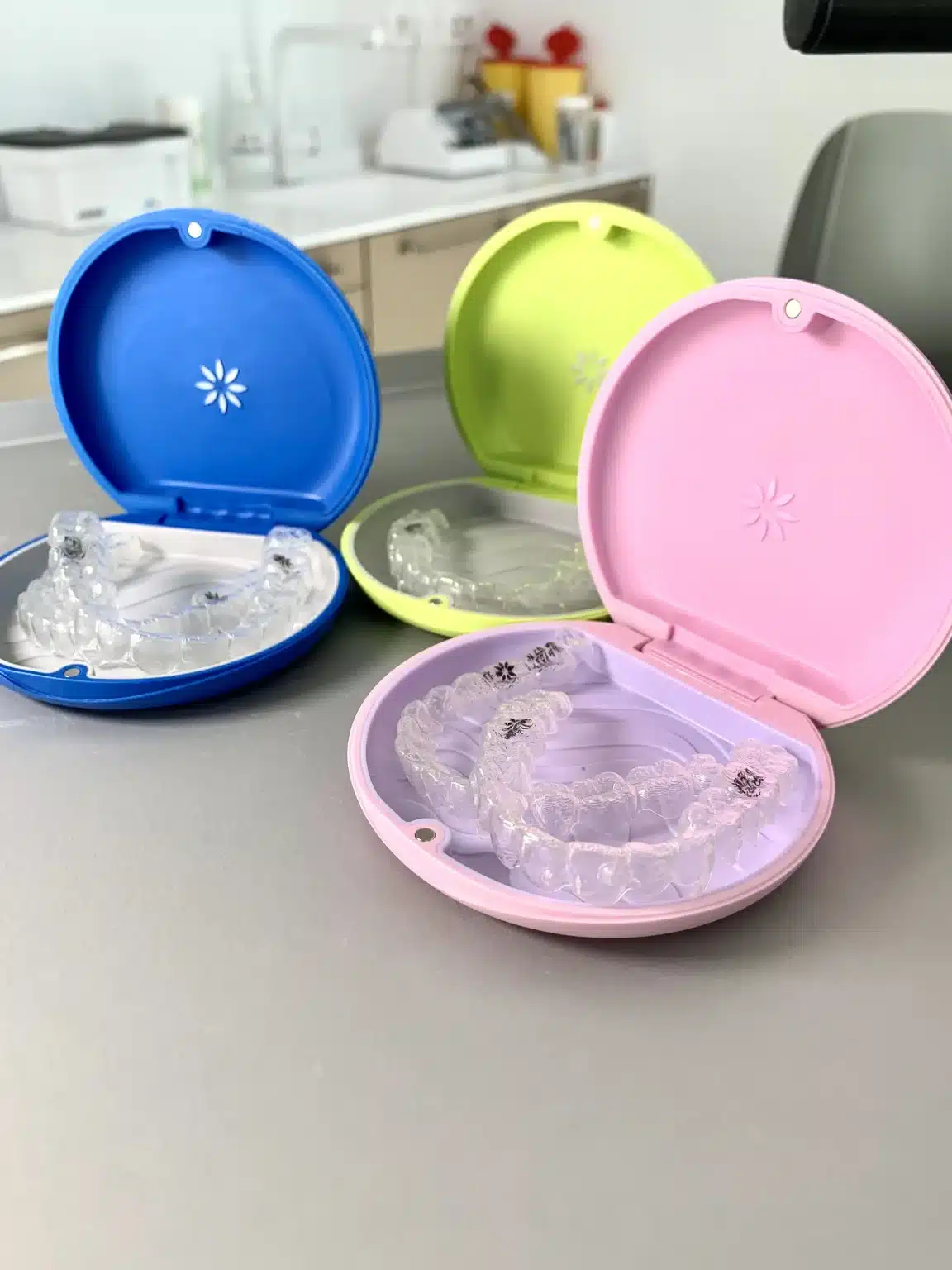
The retainer foil is a thin, transparent shell that mimics the shape of the teeth and fits them perfectly. It maintains the position of the teeth and the shape of the dental arch after orthodontic treatment. We usually make it for the upper dental arch.
Once treatment is complete, you place it on the teeth at night, following your orthodontist’s instructions, to maintain the result.
| Case type | What it corrects | Typical duration |
|---|---|---|
| Minor | Small crowding or gaps | 3–8 months |
| Moderate | Bite & alignment issues | 9–12 months |
| Complex | Significant misalignment | up to ~15 months |
Your orthodontist’s instructions for wearing the retainer foil
After alignment with an orthodontic appliance is complete, place the retainer foil on the teeth every evening. When the tooth movements during treatment were large, experts recommend wearing the retainer foil for at least 8 hours a day (during sleep) for a few months after alignment is complete. More is fine; less is not advisable, as the teeth are most likely to move again immediately after treatment.
Over the years the teeth stabilise in their new position and the wearing time can be reduced. We advise wearing the retainer foil every other night in the second year after treatment, and twice a week at night in the third year. Even after several years, keep placing the foil on your teeth a few times a week at night. If the foil is easy to insert, the result is already fairly stable; if it feels tight, increase the time you wear it, as the teeth still tend to move.
Caring for the achieved position of the teeth is a lifelong challenge.

What happens if you do not wear retention?
Teeth are living tissue and move throughout life. The fibres that anchor each tooth in its socket tend to pull it back towards its position before treatment (relapse). The likelihood of relapse is greatest in the first 12 months after the appliance is removed. If you do not wear retention, the teeth slowly drift back to their original state, and all the effort you put into a healthier, more confident smile would be wasted. This is why national health guidance advises wearing a retainer to hold the teeth in place after braces.NHS
How do we care for the retainer wire and retainer foil?
1. Caring for the retainer wire
The retainer wire is bonded to the teeth with filling material. You can protect that bond by being careful when biting harder foods such as nuts – hazelnuts, almonds and peanuts – and popcorn. Why popcorn in particular? Not because of any health scare, but because of its mechanical properties: it feels soft, yet the hard kernels in the middle can suddenly stress the wire and knock it off.
2. Hygiene with a retainer wire
To clean the tooth surfaces next to the retainer wire thoroughly, we recommend daily use of interdental brushes and a single-tufted toothbrush alongside your normal toothbrush.
In the area of the front teeth, where the wire sits on the inner surface, cleaning between the teeth with ordinary dental floss is not possible, so we use other tools.
Interdental brushes are effective and gentle, cleaning the space between the retainer wire and the gum precisely. Your dentist can help you choose the right size for each space.
You can also use dental floss with a stiffer end (a floss threader) to reach the space between the teeth, though in our experience interdental brushes are simpler here.
A single-tufted brush cleans the smaller undercut areas next to the wire and makes it easier to reach the smallest spaces between the teeth.
By keeping oral hygiene excellent around the retainer wire, you protect the health of your teeth and gums so they stay healthy and firm for a long time.
3. Cleaning the retainer foil
Clean the retainer foil regularly, ideally when you brush your teeth. Use cold water, a small toothbrush and soap on both the outside and the inside. Take care not to squeeze it, as it may deform or become damaged.
Occasionally, disinfect the foil in a solution made for cleaning dentures or orthodontic appliances.
4. What to pay special attention to
Watch out if the retainer wire comes off any tooth. If it does, arrange a visit to the orthodontist as soon as possible to have it reattached.
Never wrap the retainer foil in a napkin or tissue or leave it on the table – you could throw it away by mistake. Do not put it in your pocket, where it may break or get lost. When it is not on your teeth, store it in its box or a cup of water.
5. Are the retainer wire and retainer foil bothersome?
You may notice the retainer foil as something new in your mouth for a day or two. After that you get used to it and it becomes completely unobtrusive. Because you have already completed treatment with the invisible Invisalign aligner, wearing the foil overnight feels familiar and easy.
Regular check-ups after orthodontic treatment are important
Once active treatment is complete, arrange occasional check-ups with your orthodontist – usually after three and six months, then once a year, or as needed if problems arise (for example a retainer wire that has come off or a foil that no longer fits). The orthodontist checks the stability of the result, that the retainer is still attached and that the foil fits closely.
First aid for retainer problems while you are away
If the retainer wire comes off at one point, try to keep it partly in place on the teeth. When you get home, call us to arrange an appointment and we will reattach the retention arch. If it comes off completely, keep it and bring it to your check-up. If it pricks your tongue, cover it with wax or carefully snip it with nail clippers.
If the retainer foil breaks, keep it and call us to arrange a visit, at which we will take a new impression and make a new foil.
Curious about the difference between a retainer foil and a bruxism splint? Read more about bruxism and teeth grinding.
Frequently asked questions
How long do I need to wear my retainer?
Because teeth move throughout life, we advise keeping a retainer wire in place for life. Wearing time for the retainer foil can be reduced over the years – every night at first, every other night in the second year and twice a week at night from the third year onward – but it should never stop entirely.
Do I still need the retainer foil if I have a retainer wire?
Yes. Teeth naturally drift towards the middle of the dental arch. A retainer wire combined with regular wear of the retainer foil gives the best protection against unwanted movement after treatment.
Can I floss normally with a fixed retainer wire?
Not in the usual way. Where the wire sits on the inner surface of the front teeth, use interdental brushes, a single-tufted brush or a floss threader to clean between the teeth and around the wire.
What should I do if my retainer wire comes off or my foil breaks?
Keep the part that has come off and contact us to arrange a visit. For a detached wire, try to keep it partly in place; for a broken foil, we will take a new impression and make a replacement.
Related reading
Ready for a healthy, confident smile?
Book an Invisalign consultation at one of five OrthoDental locations in Slovenia.


Implant insertion procedure
If you are thinking about getting an implant, read our comprehensive guide to help you understand the process and the preparations that need to be made before and after the procedure itself.
Common tooth-brushing mistakes and how to correct them
Improve daily plaque removal by correcting pressure, timing, brush angle, missed surfaces and toothbrush care, with practical guidance from OrthoDental.
How to prevent gum recession? Causes, symptoms and treatment
Gum recession can lead to serious dental problems, but with early action and consistent prevention you can keep your gums healthy.
