


Clinically reviewed by Gordana Čižmek, orthodontist · Updated September 2026
The biggest disadvantage of Invisalign is not pain. It is discipline.
Invisalign aligners normally need to be worn for about 20–22 hours a day, removed before meals and put back in promptly. During the first few days you may feel pressure, an attachment can occasionally come off, an aligner may be lost, and many treatments need one or more refinement sets before the final result is reached.
That sounds demanding, but it needs context. When Invisalign is suitable for your diagnosis, everyday treatment is usually more comfortable and less visible than fixed braces, with fewer food restrictions and easier brushing and flossing. At OrthoDental we do not only show patients a digital image of straight teeth. We explain what living with aligners is actually like.
The short answer
- The main compromise is wearing the aligners consistently.
- Pressure is usually strongest during the first two or three days.
- Attachments can be visible at close range.
- Refinement aligners are a normal part of many treatments, not proof of failure.
- The treatment is private and is not normally covered by Slovenian public health insurance for adults.

1. You must wear Invisalign consistently
Invisalign can only move teeth while the aligners are in your mouth. Your orthodontist will give you an individual schedule, but most patients are asked to wear them for about 20–22 hours every day. They are removed for meals, most drinks and oral hygiene.
If the aligners are regularly left out for too long, the teeth may stop following the planned sequence. The next aligner can feel unusually tight or fail to fit fully, and treatment may need to be slowed down or revised. A realistic routine and our instructions for successful Invisalign treatment make this much easier.
In our experience, most people who choose Invisalign are well motivated and adapt quickly. When progress is delayed, inconsistent wear is one of the most common explanations. If consistent aligner wear is unlikely, aligners may not be suitable. OrthoDental does not fit fixed braces; we will explain alternatives and referral options where appropriate.
2. Eating and drinking require a different routine
With Invisalign you can eat practically anything because the aligners are removed before food. Apples, nuts and crusty bread do not carry the same risk of breaking a bracket or wire. The trade-off is that every meal and snack requires you to remove the aligners, store them safely and put them back in afterwards.
Plain water is the safest drink while wearing aligners. Coffee, tea, wine, sugary drinks and acidic drinks can stain them or become trapped between the plastic and the teeth. People who sip coffee slowly throughout the day or snack frequently usually need the biggest adjustment.
Ideally, brush before replacing the aligners. If that is impossible while travelling or at work, rinse your mouth and the aligners thoroughly, put them back in, and clean properly as soon as you can. A workable routine is better than leaving the aligners in their case for several hours.
3. Initial pressure is normal, but severe pain is not
Invisalign is not completely painless. Controlled pressure is how an orthodontic appliance moves teeth. Most patients notice the greatest tenderness during the first two or three days, especially when biting or removing the first aligner. Later changes are usually easier and may produce pressure for a few hours.
Many patients prefer to insert a new aligner before bed so the tightest initial sensation passes overnight. Research comparing clear aligners and fixed appliances also describes discomfort as strongest early in treatment and then declining. A systematic review of pain and quality of life found some early advantages for clear aligners, although no orthodontic method should be advertised as pain-free.
Persistent severe pain, an aligner cutting the gum or an aligner that will not seat properly should be checked. Contact the clinic rather than simply enduring it.
4. Invisalign is discreet, not literally invisible
The aligners are transparent and difficult to notice in normal conversation. However, many treatment plans also use small tooth-coloured composite attachments. These give the aligner the grip it needs for rotations, root control and other more demanding movements.
Attachments can be visible at close range, especially on front teeth. Some plans also use elastics or other auxiliary features. Invisalign remains much less noticeable than metal braces, but a fair consultation should explain that treatment may involve more than a completely smooth sheet of clear plastic.
What happens if an attachment comes off?
This is a common reason patients contact us, but it is not usually an emergency. In many cases the patient continues wearing the aligners and the attachment is replaced at the next planned appointment. Tell your clinical team when it happens because the importance of each attachment depends on the movement it is designed to support.

If an aligner is lost or stops fitting, contact the clinic before skipping ahead. The correct step depends on how the teeth are tracking.
5. Removable aligners can be lost
Removability is one of Invisalign’s advantages, but it also makes an aligner easy to leave in a restaurant, throw away inside a napkin or expose to a curious pet.
If you lose an aligner, contact the clinic. Depending on the stage of treatment and how the next aligner fits, you may be told to move forward, return briefly to the previous aligner or order a replacement. Do not make that decision without advice from the team supervising your case.
The simplest prevention rule is also the best one: if the aligners are not in your mouth, put them in their protective case.
Are your aligners tracking properly?
A short clinical check can distinguish normal pressure from a fit problem that needs attention.
6. Refinement aligners are often part of treatment
Some patients are surprised when the first planned series is followed by another scan and a new set of aligners. A refinement is not automatically a sign that treatment has failed. Teeth move through living bone, so biology does not reproduce every digital movement with perfect precision.
After the first series, the orthodontist evaluates the bite and tooth positions, scans again when needed and adjusts the plan. Certain rotations, vertical movements and root movements are less predictable than simple tipping. Reviews of the evidence on clear-aligner effectiveness support the need for careful planning and clinical monitoring.
At OrthoDental, refinements are planned according to the selected package and explained in the written offer. The treatment estimate may change according to biological response and wear. Our guide to how long Invisalign treatment takes explains the timeline in more detail.
7. Cleaning is easier than with braces, but still essential
There are no wires and brackets to clean around. You remove the aligners and brush and floss normally. That is an important advantage, but it does not mean hygiene can be ignored. Replacing an aligner over unclean teeth can trap food, sugar and acid next to the enamel.
- Bad breath and stained aligners can develop.
- Plaque may increase the risk of decay.
- Gums can become inflamed and bleed.
- Enamel may demineralise if hygiene is poor.
Do not use hot water because it can distort the material. Avoid strongly abrasive cleaners. Follow the cleaning method recommended by your clinical team and continue routine dental examinations throughout orthodontic treatment.
8. Invisalign can temporarily affect speech
Some people notice a slight lisp for the first few days while the tongue adapts to the thin layer of material around the teeth. The change is usually mild and temporary. Normal conversation and reading aloud generally help adaptation; repeatedly removing the aligners can prolong it.
A systematic review of speech with clear aligners found that some sounds can be affected temporarily, although the available evidence is limited. If you lecture, sing or perform professionally, starting during a quieter few days can make the adjustment easier.
9. Invisalign costs more than simple cosmetic aligners
Current OrthoDental prices are published transparently. Invisalign Comprehensive for both arches is listed at €4,000. Invisalign Small is listed at €2,500 for both arches. The first Invisalign consultation is free. Complex cases may require additional procedures or a supplement, so the final written offer is prepared only after an examination and digital planning.
See the full Invisalign price guide and the English orthodontic price list. If the goal is a small cosmetic correction, Shine clear aligners may be a more affordable local option. Shine and Invisalign are not interchangeable for every diagnosis, especially when the bite needs comprehensive correction.
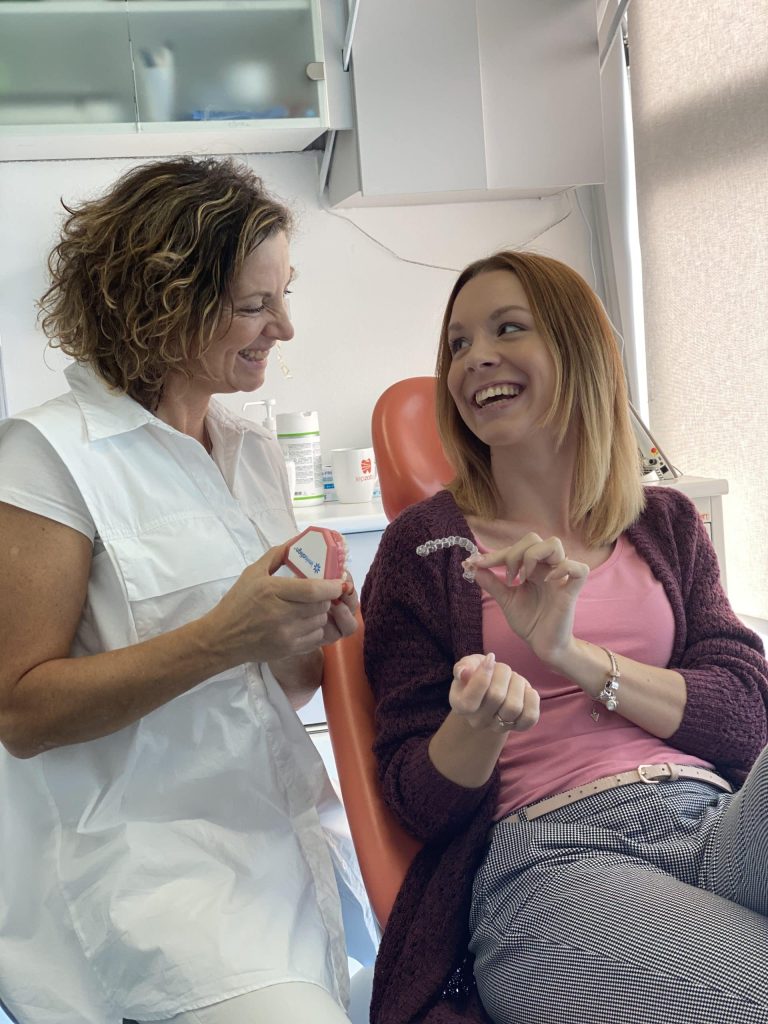
Unsure whether removable aligners fit your case?
We will explain both the benefits and the compromises after examining your teeth—not from a generic online checklist.
10. Who may not be a good Invisalign candidate?
With correct diagnosis, experienced planning and auxiliary techniques, Invisalign can treat many complex cases. The brand alone does not determine suitability. Before treatment, the orthodontist must assess the bite, roots, jaw relationship, bone support, gums and any untreated dental disease.
Special planning or another treatment method may be preferable in cases involving active periodontal disease, severe skeletal discrepancies, impacted teeth, very short clinical crowns or treatment combined with jaw surgery. The clearest contraindication is a patient who cannot or does not want to wear removable aligners consistently.
Invisalign versus fixed braces in daily life
| Everyday issue | Invisalign | Fixed braces |
|---|---|---|
| Eating | Remove the aligners and eat normally | Hard and sticky foods are restricted |
| Cleaning | Brush and floss without the aligners | Cleaning around brackets and wires is more demanding |
| Irritation | Smooth plastic usually causes less cheek irritation | Brackets and wires can rub the lips and cheeks |
| Visibility | Transparent and discreet | Visible throughout treatment |
| Patient responsibility | Consistent daily wear is essential | The appliance cannot be removed |
The right method always depends on the diagnosis. Read our detailed Invisalign versus braces comparison.
Our honest conclusion
No orthodontic treatment is free from inconvenience. Teeth are moving, treatment lasts for months, and the patient must cooperate. With Invisalign, most compromises are small and predictable: initial pressure, removing the aligners to eat and remembering to wear them consistently.
For suitable patients, these compromises are usually outweighed by the ability to eat normally, clean the teeth easily and avoid metal wires. The deciding factor is not the plastic alone. It is diagnosis, specialist-led digital planning and continuous supervision.
Is Invisalign right for you?
OrthoDental has managed more than 3,000 Invisalign cases and is an Invisalign Diamond Blue 2 Apex Provider, placing the team in the top 1%. Your treatment is based on specialist-led digital planning, and the first Invisalign consultation with a 3D scan is free.
This article provides general information and cannot replace an individual orthodontic diagnosis.


White or amalgam filling? Advantages, disadvantages and prices
White (composite) or amalgam filling? Compare their advantages, disadvantages, durability and prices, and learn how amalgam fillings are safely removed and replaced.

Oral cancer: why early detection matters
Learn which mouth changes need prompt assessment, the main oral cancer risk factors and what happens during a routine soft-tissue examination.

Tooth extraction price | How much does a tooth extraction cost?
How much does a tooth extraction cost? The price depends on the type of extraction – see OrthoDental’s clear, transparent price list.
