


Clinically reviewed by Gordana Čižmek, specialist in orthodontics and dentofacial orthopaedics · Updated September 2026
If you are considering clear aligners, you have probably discovered that Invisalign is not the only option. Depending on the clinic and country, you may also see Spark, Angel Aligner, ClearCorrect, local systems such as Shine, and low-cost aligners sold mainly online.
The short answer
- The differences between established clear-aligner systems are usually smaller than their marketing suggests.
- The clinician who diagnoses, plans and supervises treatment matters more than the brand name on the plastic.
- Invisalign has the longest clinical history and one of the broadest toolsets for complex movements.
- For a small cosmetic correction, a less expensive supervised system may be sufficient.
- We advise against mail-order aligners without a proper examination and accountable clinical supervision.
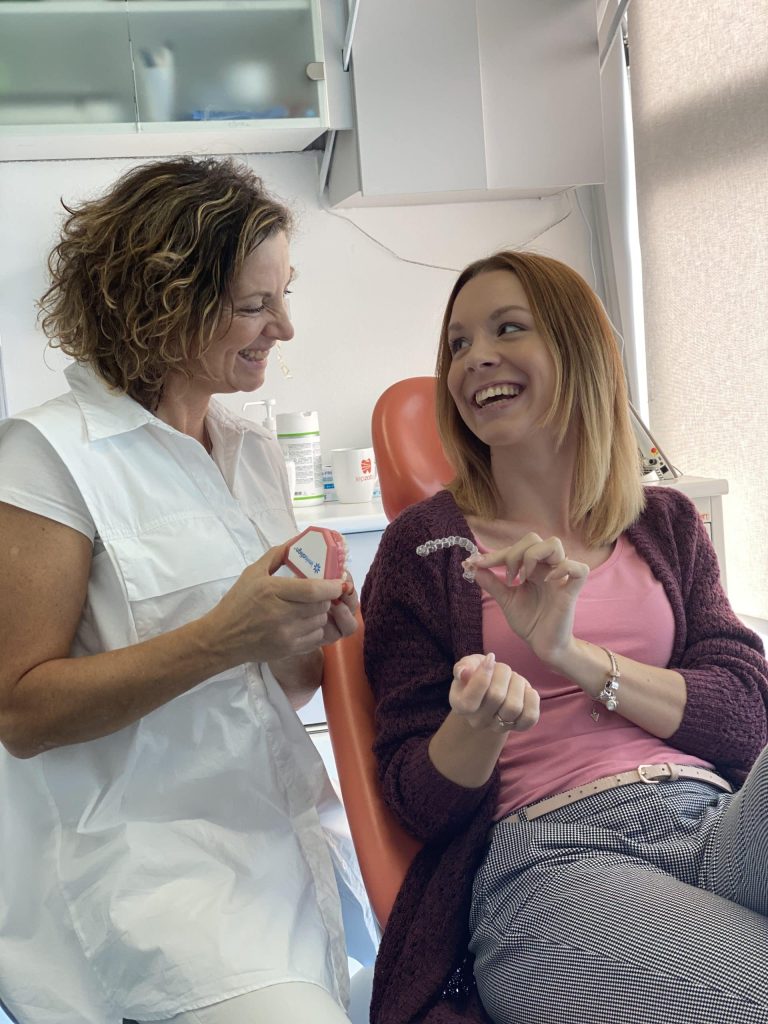
OrthoDental uses Invisalign for comprehensive orthodontic treatment and Shine for carefully selected, simpler corrections. This comparison is therefore not written from a brand-neutral position. It is written to be transparent and verifiable: we separate clinical principles from manufacturer claims and explain where each option has limits.
The most important fact: the aligner is a tool
All modern clear-aligner systems work on the same basic principle. A sequence of transparent trays, manufactured from a digital plan, applies controlled forces that move teeth step by step. Aligners are usually changed every 7–14 days and worn for about 20–22 hours a day, according to the individual prescription.
No brand can guarantee a result by itself. Research shows that some movements are more predictable than others. Rotations, vertical movements and root control can require attachments, elastics, extra planning and refinement aligners. That is why treatment success depends on diagnosis, the quality of the digital plan, monitoring during treatment and the patient’s cooperation.
A useful question is therefore not only “Which aligner brand is best?” but “Who will plan my treatment, who will check it, and what happens if my teeth do not follow the first plan?”
Invisalign
Often best suited to: comprehensive and complex cases, children who need early treatment, and patients who want a mature system with a long clinical history.
Invisalign is the best-known clear-aligner system. Its treatment ecosystem includes SmartTrack material, ClinCheck digital planning, SmartForce attachments and auxiliary features, iTero scanning and Invisalign First for growing children. The breadth of these tools helps an experienced orthodontist manage much more than simple alignment of the front teeth.
Its strongest practical advantage is not that the plastic is magically different. It is the combination of a large body of clinical experience, a developed planning platform and tools for demanding movements. The disadvantage is price: a comprehensive Invisalign plan usually costs more than a short cosmetic aligner treatment.
Spark
Often best suited to: patients treated by an orthodontist with substantial Spark experience, including some complex cases.
Spark is an established professional system from Ormco. It is known for its TruGEN material and is often marketed around clarity, stain resistance and comfort at the edge of the aligner. It can be a serious clinical alternative when the treating orthodontist knows the system well.
Its main limitation compared with Invisalign is a shorter market and clinical history. Claims about superior material performance should also be read carefully: some comparisons are manufacturer-generated rather than independent clinical outcome studies.
ClearCorrect
Often best suited to: mild to moderate cases with an experienced local provider.
ClearCorrect, owned by Straumann, uses its own planning platform and aligner material. Availability and support vary by country and can change, so patients should confirm that their clinic can obtain refinements and replacements throughout the full treatment period.
For a straightforward case it may be a valid option. For more complex treatment, ask the provider to explain which auxiliary features will be used, how the bite will be controlled and what is included if the first series does not complete the planned movement.
Shine: a supervised local alternative
Often best suited to: small or moderate cosmetic corrections such as mild crowding, small spaces and relapse of front teeth after previous orthodontic treatment.
Shine is a locally supplied clear-aligner option used by OrthoDental for suitable cases. The same specialist-led team performs the examination, digital planning and controls. Local production can shorten delivery time, which is useful when a replacement or additional aligner is needed.
Shine is not simply a cheaper copy of comprehensive Invisalign treatment. Its role is narrower. When the case involves major bite correction, difficult rotations or more complex root movements, Invisalign usually offers a broader system. If Shine is sufficient, we say so; if it is not, the diagnosis should determine the recommendation.
Angel Aligner and other emerging systems
Often best suited to: patients whose provider has real, verifiable experience with that specific system.
Angel Aligner is a large Asian manufacturer expanding in Europe. The technology is developing quickly, but European clinical experience and independent comparative evidence are not as extensive as for older systems. That does not mean it cannot work. It means the experience of the individual clinician, local support and the refinement process deserve particularly close attention.
A low price does not compensate for missing diagnostics, periodontal checks or a clinician who is accountable when treatment does not track.
Mail-order aligners without in-person supervision
Best suited to: no patient without appropriate diagnostics and an accountable clinician.
Some low-cost models ask patients to take impressions or photographs at home and then deliver aligners by post. Moving teeth without a proper examination can miss gum disease, bone loss, decay, root problems and bite relationships. A digital image of straighter front teeth is not a diagnosis.
The collapse of SmileDirectClub also demonstrated a separate business risk: patients can be left part-way through treatment without clinical support. Remote monitoring can be useful as part of supervised care, but it is not a substitute for diagnostic records, a responsible clinician and access to in-person care when something goes wrong.
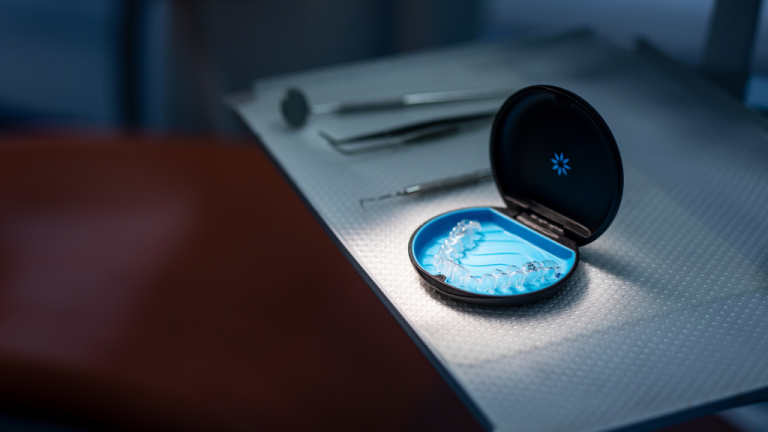
Compare systems using your own diagnosis
For a small correction, a supervised lower-cost system may be enough. Complex bite changes require a broader clinical toolset.
Invisalign versus other clear aligners: comparison
| System | Main strength | Main limitation | Clinical supervision |
|---|---|---|---|
| Invisalign | Long history, mature planning platform and broad tools for complex movements | Usually costs more than limited cosmetic systems | Yes, through an Invisalign provider |
| Spark | Professional system with a clear material and tools for orthodontic treatment | Shorter clinical history and smaller evidence base | Yes, through a provider |
| ClearCorrect | Established alternative backed by a major dental company | Availability and local support vary by market | Yes, through a provider |
| Shine | Local, supervised and cost-effective for selected simpler cases | Not designed to replace comprehensive treatment in every diagnosis | Yes, at OrthoDental |
| Angel Aligner | Growing technology platform with several aligner materials | Less European comparative evidence and local experience | Yes, through a provider |
| Mail-order systems | Low advertised entry price | Potentially inadequate diagnostics, supervision and support | Often limited or unclear |
There are very few independent studies comparing final outcomes across brands in a like-for-like way. The evidence is much stronger for the general principle that clear aligners can be effective in selected cases, while predictability varies by movement and diagnosis. See this overview of systematic reviews on clear-aligner effectiveness.
Which system fits which type of case?
Mild crowding or small spaces in the front teeth
Most established, clinically supervised systems can manage simple alignment. Price, local support and the clinician’s experience may reasonably influence the choice. Shine can be a good option when the goal is limited and the bite does not require comprehensive correction.
Relapse after previous orthodontic treatment
A short series may be sufficient if only a few teeth have moved. The clinician should still identify why relapse occurred and plan long-term retention.
Difficult canine or premolar rotations
These are among the less predictable aligner movements. A developed attachment system, experienced planning and the expectation of refinements are important. Invisalign and Spark are commonly considered for this work.
Deep bite or open bite
These diagnoses require more than straight front teeth. Bite ramps, elastics, intrusion or other planned movements may be needed. The experience of the orthodontist matters greatly, and not every low-cost package is appropriate.
A narrow arch or crossbite
Moderate dental expansion may be possible with aligners. Skeletal expansion in adults is much more limited and can require a different appliance or combined treatment. In growing children, Invisalign First may be considered after a specialist assessment.
A simple cosmetic case with a limited budget
The most expensive system is not automatically necessary. An ethical provider should recommend a narrower, less expensive option when it can predictably achieve the agreed goal—and explain its limits.
When clear aligners may not be the right treatment
Clear aligners are not universal. An orthodontist may recommend fixed appliances, surgery or a combined approach in situations such as:
- large skeletal discrepancies between the jaws;
- severely rotated, tipped or impacted teeth;
- complex space closure following extraction;
- active periodontal disease or untreated decay;
- very short clinical crowns that give the aligner limited grip;
- an inability to wear removable aligners consistently.
Most of these problems can still be treated—just not necessarily with aligners alone. Diagnosis comes before brand selection.
Bring the full written offer—not only the headline price
We can help you compare diagnostics, both arches, refinements, retainers and who remains responsible through the end of treatment.
What matters when comparing treatment offers
- Diagnosis: Is the plan correcting only tooth alignment or the bite as well?
- Planner: Is specialist-led digital planning included, and who approves the final ClinCheck or equivalent plan?
- Experience: How many similar cases has the clinician personally planned and supervised?
- Diagnostics: Does the process include a clinical examination, 3D scan, appropriate radiographs and gum assessment?
- Total price: Are appointments, attachments, refinements and retention clearly listed?
- Support: What happens if an aligner is lost, an attachment comes off or teeth stop tracking?
- Alternatives: Why is this system recommended over fixed braces or another aligner option?
Compare full written offers, not only a headline price “from” a low number. Current OrthoDental figures are available in the Invisalign price guide and English price list.
Warning signs
- A promised result or exact duration before proper diagnostics.
- No clear name for the clinician responsible for treatment.
- A price that does not explain refinements, controls or retention.
- Pressure to sign immediately because an offer expires “today”.
- No access to the digital plan before treatment starts.
- The claim that attachments or follow-up visits are never needed.
- Treatment supplied entirely by post without safe access to in-person care.
Frequently asked questions
Is Invisalign better than Spark?
There is no universal answer. Invisalign has the longer clinical history and a broad system for complex treatment. Spark is a serious professional alternative and may be an excellent choice in the hands of an experienced Spark orthodontist. The diagnosis and the clinician’s skill matter more than a general brand ranking.
Why is Invisalign often more expensive?
The cost reflects the planning platform, scanning ecosystem, material, provider fees and the complexity of the case. At OrthoDental, Invisalign treatment currently ranges from €2,500 for Invisalign Small in both arches to €4,000 for Comprehensive treatment, with documented €1,000–€2,000 supplements for some highly complex cases. Always compare the full scope.
Can every orthodontic problem be treated with clear aligners?
No. Severe skeletal discrepancies, certain impacted teeth, difficult root movements and active gum disease may require another method or combined treatment. An examination and diagnostics are necessary before making that decision.
Do all serious systems use attachments?
Most comprehensive systems use tooth-coloured attachments for movements that plastic alone cannot predictably deliver. Attachments are a clinical tool, not evidence that the treatment is going badly.
How long does clear-aligner treatment take?
It depends on complexity, biological response and wear. Simpler cases may take several months; comprehensive cases often take a year or longer. Read our guide to Invisalign treatment duration.
How to decide
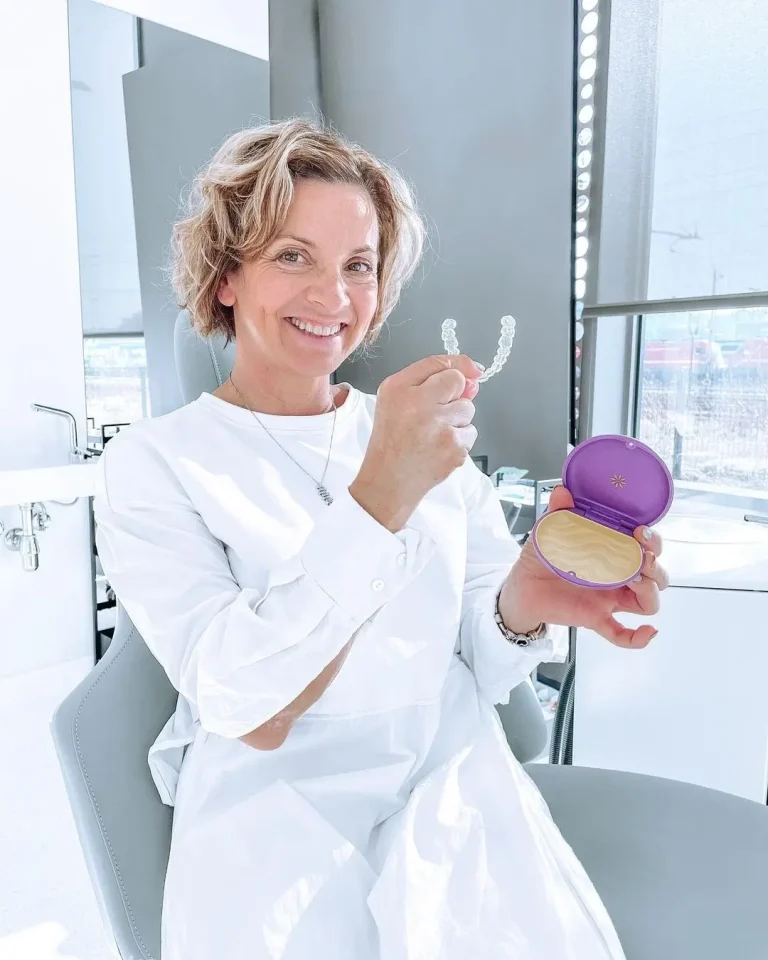
Choose the clinician first, then the system. Ask for a diagnosis, view the digital plan, compare the total written price and make sure someone is responsible for monitoring the case from the first aligner through refinements and retention.
A specialist-led comparison based on your own teeth
OrthoDental has managed more than 3,000 Invisalign cases and is an Invisalign Diamond Blue 2 Apex Provider, placing the team in the top 1%. We use specialist-led digital planning and will also tell you honestly when a simpler Shine plan or another approach is more appropriate.
This article provides general information and cannot replace an individual orthodontic diagnosis.


Sleep apnea | Symptoms, causes and a mandibular advancement device
Explore sleep apnea treatment options that can improve your quality of life. Find out how a custom mandibular advancement device at OrthoDental can help you sleep better.
Price of a dental implant
Replacing teeth with dental implants is a major financial investment, so it is good to be aware of all the advantages that the decision brings you. If you are interested in the price of a dental implant, we have prepared as comprehensive explanations as possible to help you make a decision.

TMJ syndrome | Jaw joint pain: causes, symptoms and treatment
Learn all about temporomandibular joint (TMJ) syndrome, from the role of psychological factors to the treatment options that can improve your quality of life.
