


Medically reviewed by Pia Slana, dentist · Last updated: July 2026
- Canker sores are harmless, non-contagious ulcers inside the mouth.
- Most heal on their own within 7 to 14 days.
- Common triggers include minor injury, stress, certain foods and nutrient deficiencies.
- See a dentist if a sore lasts over 2 to 3 weeks, is very large or keeps returning.
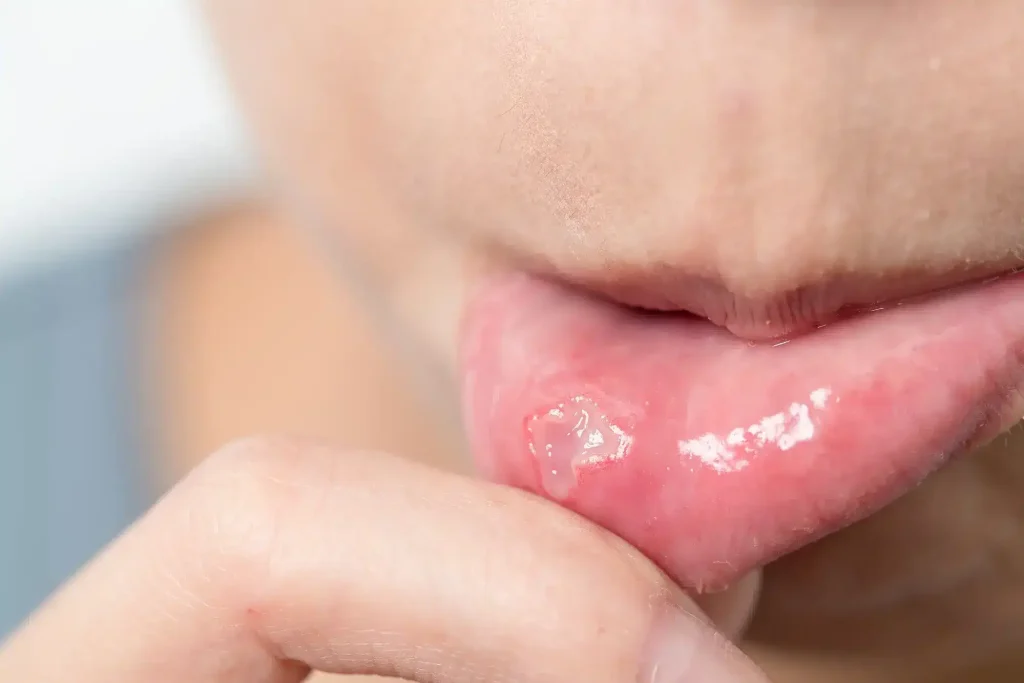
A canker sore is a painful ulcer on the oral mucosa that most often appears on the inside of the lips, cheeks, the tongue or the soft palate. It is usually harmless and not contagious. Smaller canker sores normally heal on their own within 7 to 14 days, and the pain often begins to ease after just a few days. If a canker sore lasts longer than 2 to 3 weeks, is very large, recurs frequently, or is accompanied by fever, difficulty swallowing or a general feeling of being unwell, a check-up with a dentist or doctor is recommended.NHS
What is a canker sore?
Canker sores are benign ulcers of the oral mucosa that appear on the inside of the mouth or on the tongue. They are uncomfortable, painful lesions with red, inflamed surrounding tissue and usually a white or greyish centre. Although canker sores can occur in people of all ages, they are especially common during adolescence and early adulthood.
Minor and major canker sores
Canker sores can be divided into two main categories according to their size: minor and major. Minor canker sores are usually up to 10 mm in diameter and heal without scarring within one to two weeks. Major canker sores are larger than 10 mm, can last several weeks and often heal leaving scars. Major canker sores are less common, but they are more painful and may require professional treatment.
Where do canker sores most often appear?
Canker sores can appear almost anywhere in the oral cavity, but some sites are more prone to them. They are most often found on the inside of the lips, on the gums, on the soft palate and on the tongue. Less commonly they can also appear under the tongue and on the inside of the cheeks. Importantly, canker sores do not appear on the outside of the lips – this is what distinguishes them from other types of sores, such as herpes simplex and viral ulcers.
Sometimes other inflammations also occur in the mouth. One of them is a dental abscess, a purulent inflammation next to a tooth or in the gum.
Symptoms that accompany canker sores in the mouth
Canker sores are accompanied by a range of symptoms that can affect people in different ways. It usually begins with a burning or tingling pain at the spot where the canker sore will appear, even before it is visible. As the ulcer develops, a white or greyish dot with a red rim appears. Other symptoms may include redness, swelling, a burning sensation, itching and occasionally a raised body temperature or a general feeling of being unwell, especially if the canker sores are extensive or numerous.
How to recognise canker sores in the mouth?
Recognising canker sores in the mouth is usually fairly simple thanks to their characteristic features. You can identify them by their appearance, and another characteristic is that they are painful to the touch and can cause discomfort when speaking, eating or drinking. Unlike sores caused by the herpes simplex virus, canker sores appear exclusively inside the oral cavity.
Why canker sores form on the tongue, lip or in the mouth
Canker sores can appear for various reasons, and it is often difficult to pinpoint a single direct cause. The most common reasons are the following:
- Hormonal changes: some women notice canker sores appearing during menstruation, which suggests a link between hormonal fluctuations and canker sores.
- Injuries in the mouth: hard food, biting the inside of the lip or aggressive tooth brushing can cause minor injuries that lead to canker sores.
- Sensitivity to certain foods: some foods, such as chocolate, citrus fruits, coffee or nuts, can trigger canker sores in people who are sensitive to them.
- Deficiency of vitamin B12, iron or folic acid: an unbalanced diet or certain health conditions can lead to a deficiency of these vital nutrients, which increases the risk of canker sores.
Other factors that influence the development of canker sores
The development of canker sores is not always linked to simple causes alone. Several factors can increase the likelihood of them appearing:
- Stress: periods of increased stress or anxiety are often associated with a greater number of canker sores.
- Genetics: if other members of your family have problems with canker sores, you are more likely to have them too.
- Certain illnesses: conditions such as coeliac disease or Crohn’s disease can be linked to more frequent canker sores.
- Medicines: some medicines, especially those that affect the immune system or cause dry mouth, can increase the risk of canker sores.
How to get rid of a canker sore in the mouth?
Canker sores are mostly harmless, but they can be very unpleasant and painful. Even though most disappear on their own within one to two weeks, there are methods that can speed up healing and relieve symptoms. Among them is the modern method of laser treatment, which we provide at OrthoDental. Laser treatment not only helps a canker sore heal faster, but also reduces pain and discomfort.
How to support healing and relieve symptoms?
There are several approaches to relieving the symptoms of mouth ulcers. It is advisable to avoid spicy and acidic foods, which can irritate the ulcers. Mouthwashes or gels containing antiseptics or local anaesthetics can help reduce pain and prevent secondary infection. Rinsing the oral mucosa with salt water can have a similar effect. For frequent or very painful canker sores, a visit to OrthoDental is recommended, where we help canker sores heal faster with laser treatment and reduce pain and discomfort – an innovative solution that is ideal if you are looking for immediate relief.
Book a check-up for canker sore relief
How to prevent a canker sore from forming in the first place?
Preventing ulcers of the oral mucosa is not always easy, as the exact causes are not yet fully understood. However, by knowing your triggers and taking a few preventive measures you can improve your chances of avoiding them.
It is advisable to follow these steps:
- Balanced diet: a deficiency of certain vitamins and minerals can increase the risk of canker sores, so make sure you get enough vitamin B12, iron and folic acid.
- Personal oral hygiene: regular, gentle tooth brushing with a soft toothbrush and the use of mouthwash can reduce the risk of injuries in the mouth and the canker sores associated with them.
- Avoid known triggers: if you have noticed that a particular food or drink triggers a canker sore, avoid it.
- Stress management: relaxation techniques such as meditation, deep breathing and physical exercise can help reduce the risk of stress-related canker sores.
Mouth ulcers affect quality of life
Canker sores or mouth ulcers are common and mostly harmless, but they can bring considerable discomfort in the oral cavity and in everyday life. Even though they are sometimes hard to avoid, good oral hygiene and timely action can be key factors that help you heal faster. It is important to listen to your body, recognise your triggers and look for solutions that best suit your lifestyle and health needs.
Laser treatment that can help your oral mucosa
Today there are medical solutions for managing and quickly healing canker sores, such as laser treatment at OrthoDental – the fastest way to say goodbye to the prolonged discomfort caused by canker sores.
Like canker sores, cold sores on the lip are a similar nuisance. Read more about cold sores and oral herpes.
Frequently asked questions
How long does a canker sore last?
Minor canker sores usually disappear within one to two weeks, and the pain often decreases after just a few days. Larger canker sores can last longer, even several weeks, so a check-up is recommended for a larger or persistent ulcer.
Are canker sores contagious?
No. A canker sore is generally not contagious and is not transmitted by kissing, cutlery or contact. This is one of the main differences between a canker sore and a cold sore (herpes).
What is the difference between a canker sore and herpes?
A canker sore forms in the mouth, on the oral mucosa, and is not contagious. Herpes more often appears on the lip or along the edge of the lips, can form as blisters and is contagious. Canker sores are not the same as herpes, even though people often confuse them.
Why does a canker sore form?
The exact cause is often unknown. A canker sore can be triggered by injury to the mucosa, biting the cheek, irritation from a toothbrush, stress, a drop in immunity, certain foods, hormonal changes, a deficiency of certain nutrients or other health problems.
What helps with a canker sore?
Gentle oral hygiene, avoiding acidic, spicy and hard food, drinking enough fluids and using local preparations to reduce pain can all help. For larger, very painful or recurring canker sores, a dentist may advise additional treatment, and in some cases laser therapy is used to reduce pain and speed up healing.
Can I pierce or scratch a canker sore?
No. It is not advisable to scratch, squeeze or mechanically remove canker sores, because you can further damage the mucosa, prolong healing and increase the chance of inflammation.
What should I eat when I have a canker sore?
Choose soft, lukewarm and non-irritating food. Avoid acidic food, citrus fruits, very salty food, spicy dishes, alcohol and carbonated drinks, as they can increase the burning sensation.
When should I see a dentist about a canker sore?
A check-up is recommended if the canker sore does not disappear within 2 to 3 weeks, if it is very large, very painful, recurs frequently, bleeds, makes eating or swallowing difficult, or is accompanied by fever, a general feeling of being unwell or swollen lymph nodes.
Why do my canker sores keep coming back?
Recurring canker sores can be linked to stress, mechanical injuries, sensitivity to certain foods, hormonal changes, a drop in immunity or a deficiency of certain nutrients. If they appear frequently, a check-up is sensible to rule out other causes.
Can a canker sore be a sign of a more serious illness?
Most canker sores are not dangerous. Nevertheless, an ulcer that does not heal, keeps growing, is not painful, bleeds or recurs very frequently requires a check-up, as some changes in the mouth can look similar to canker sores.
Can children get canker sores?
Yes. Canker sores can appear in children and adolescents. If a child has difficulty eating or drinking because of the pain, has a fever or the ulcers recur frequently, a check-up is recommended.
Can a dentist help with a canker sore?
Yes. A dentist can check whether it really is a canker sore, rule out other changes in the mouth and advise appropriate therapy. For very painful canker sores they can help with local treatment, protective preparations or laser therapy.
Related reading
Ready for a healthy, confident smile?
Book a dental examination in Ljubljana or Kozina.


Price of a dental implant
Replacing teeth with dental implants is a major financial investment, so it is good to be aware of all the advantages that the decision brings you. If you are interested in the price of a dental implant, we have prepared as comprehensive explanations as possible to help you make a decision.
Orthodontist Waiting Times in Slovenia 2026: Up to 7 Years (and 2 Ways Around Them)
The wait for a first orthodontic exam in Slovenia is up to 2,821 days. See the official data and two legal ways to start treatment within days: self-paid Invisalign or EU treatment abroad with ZZZS reimbursement.

Dentures – a perfect smile at any age
Dentures are an ideal solution for people of all ages who have lost one or more teeth. Learn about the different types of dentures and how they can improve your quality of life.
