


Attachments (the small tooth-coloured bumps)
At the start of your treatment, your orthodontist places small attachments on some of your teeth and removes them once treatment is complete. Both fitting and removing the attachments are painless and leave no marks on the teeth.
Depending on the position of your teeth and the complexity of your case, tooth-coloured attachments may also be placed on the second molars, and small elastics may later be added to help move the teeth more efficiently. Your orthodontist will explain exactly what your treatment involves.
Fitting your aligners
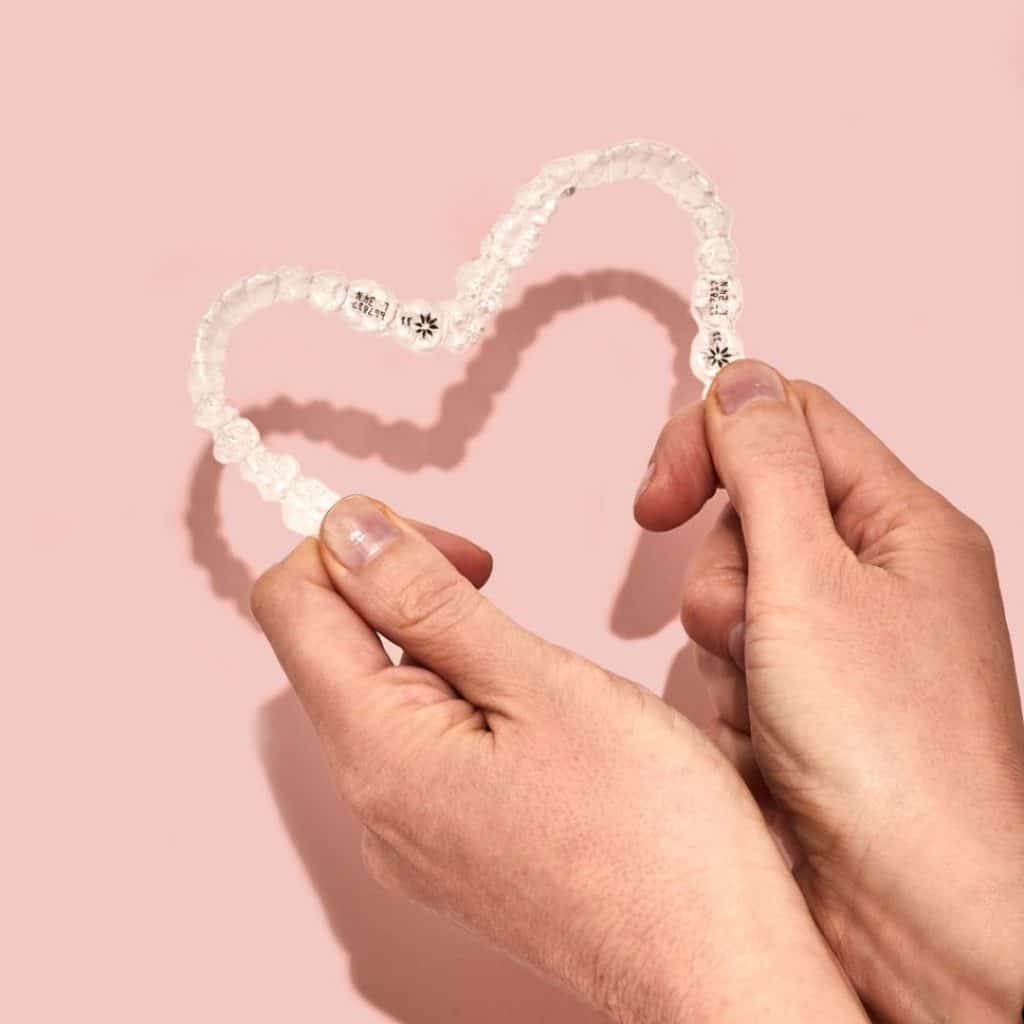
The good news is that Invisalign aligners are straightforward to put in once you know how. Start with clean hands. Place the upper aligner over your teeth and gently press it into place with your tongue against the roof of your mouth. Do the same with the lower aligner, then press both gently with your fingertips until they seat fully over the teeth. After a little practice this becomes quick and easy.
Take care: never bite down to force your aligners into position — this can damage them.
How many hours a day should I wear my aligners?
For your teeth to move successfully and on schedule, wear your aligners for 22 hours a day — including overnight while you sleep. The only times they should be out are when you eat, drink anything other than water, and carry out your oral hygiene (brushing, flossing and cleaning the aligners). Wearing them for the full number of hours is the single most important factor in keeping your treatment on track.
When should I take my aligners out?
Always remove your aligners for the following:
- Eating: take them out before eating or drinking anything other than water, so food cannot become trapped against your teeth and cause decay.
- Brushing: brush and floss before putting your aligners back in, so plaque and bacteria do not build up and lead to gum problems.
- Drinking anything other than water: many drinks can stain your aligners, so remove them first, then brush and rinse before putting them back.
Used as directed, Invisalign is a safe and effective way to straighten teeth.
Can I eat with my aligners in?
No — always take your aligners out to eat. Food can stain or damage them, so remove them before every meal and put them back in afterwards. You can, however, drink water freely while wearing your aligners.
When is it time for a new set of aligners?
Invisalign works by moving to a new set of aligners every 1–2 weeks, following your orthodontist’s plan. The process is simple, comfortable and effective. You will usually see your orthodontist every 7–10 weeks for a check-up.
How your teeth move
The length of Invisalign treatment varies with the starting position of your teeth and the complexity of your case. Each aligner applies gentle, controlled pressure that gradually guides your teeth towards their target position. As you move through the sets, each new aligner feels a little firmer at first — that is it doing its work.
How long until my teeth are straight?
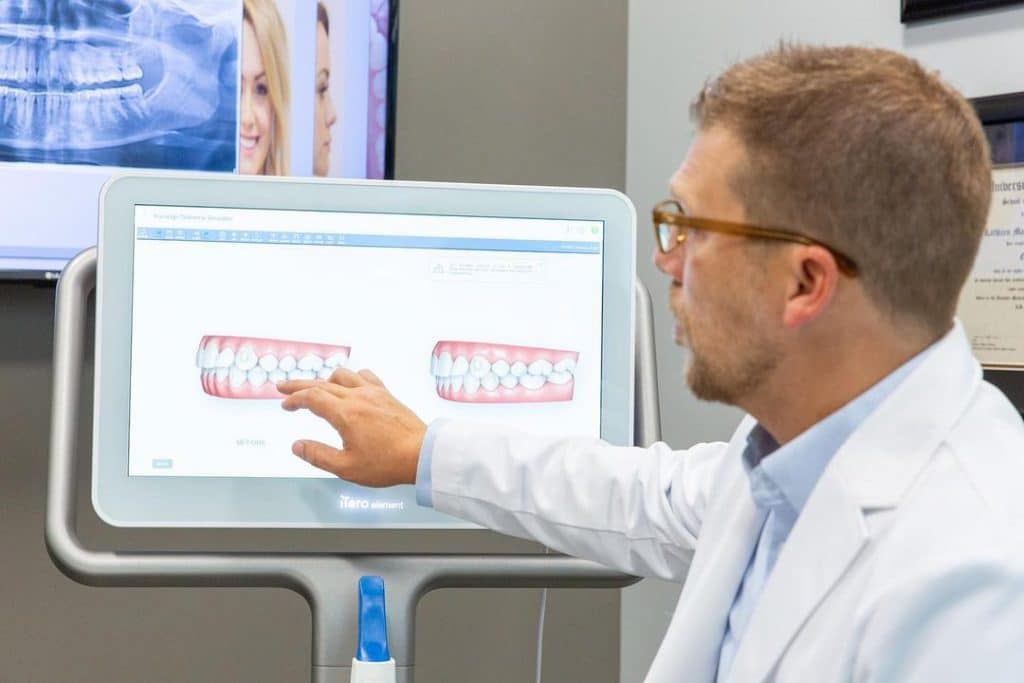
Most Invisalign treatments are completed in 9 to 15 months, though the exact time depends on the starting position of your teeth and the complexity of your case.
Whichever plan you follow, wearing your aligners for the full 22 hours a day is essential to finishing on time and achieving the result you want.
When will I see the first results?
Invisalign often works faster than traditional fixed braces, and you will probably notice the first changes after just two or three months.
Storing your aligners
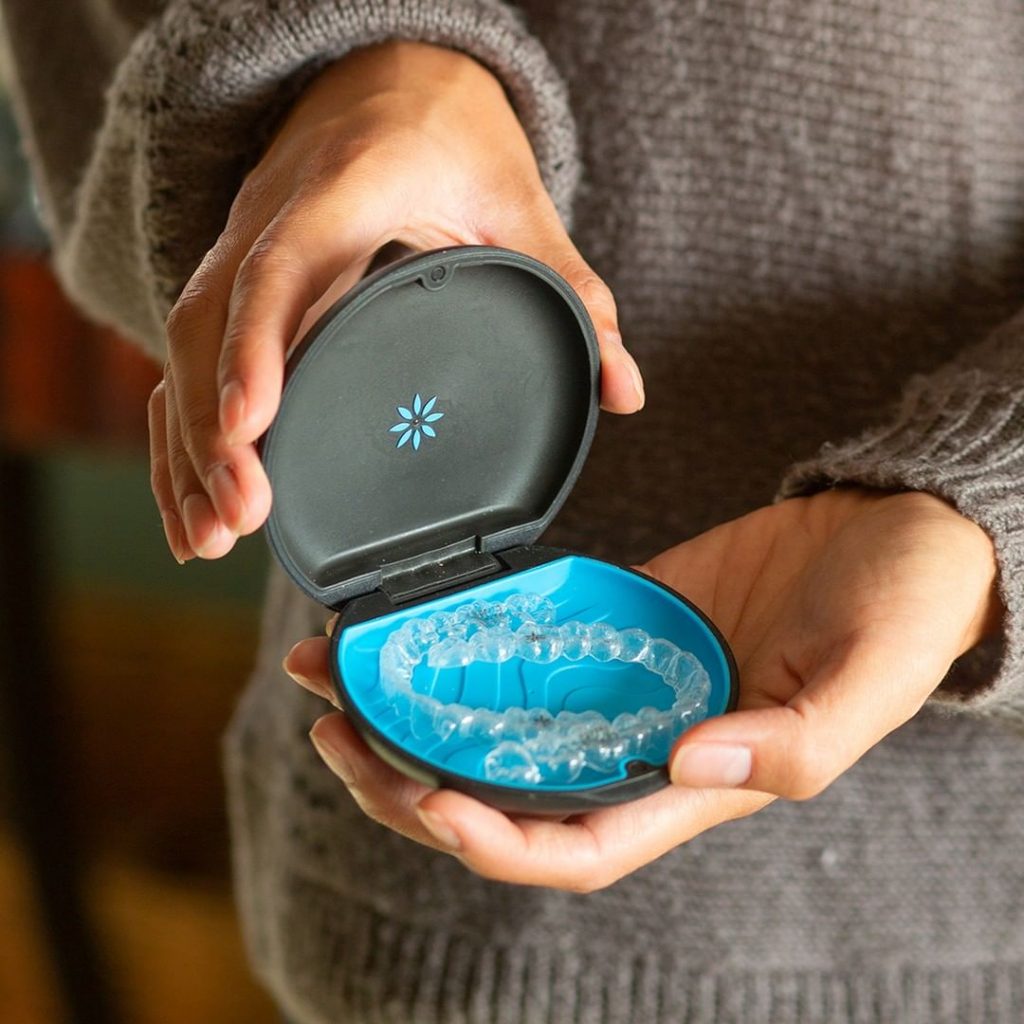
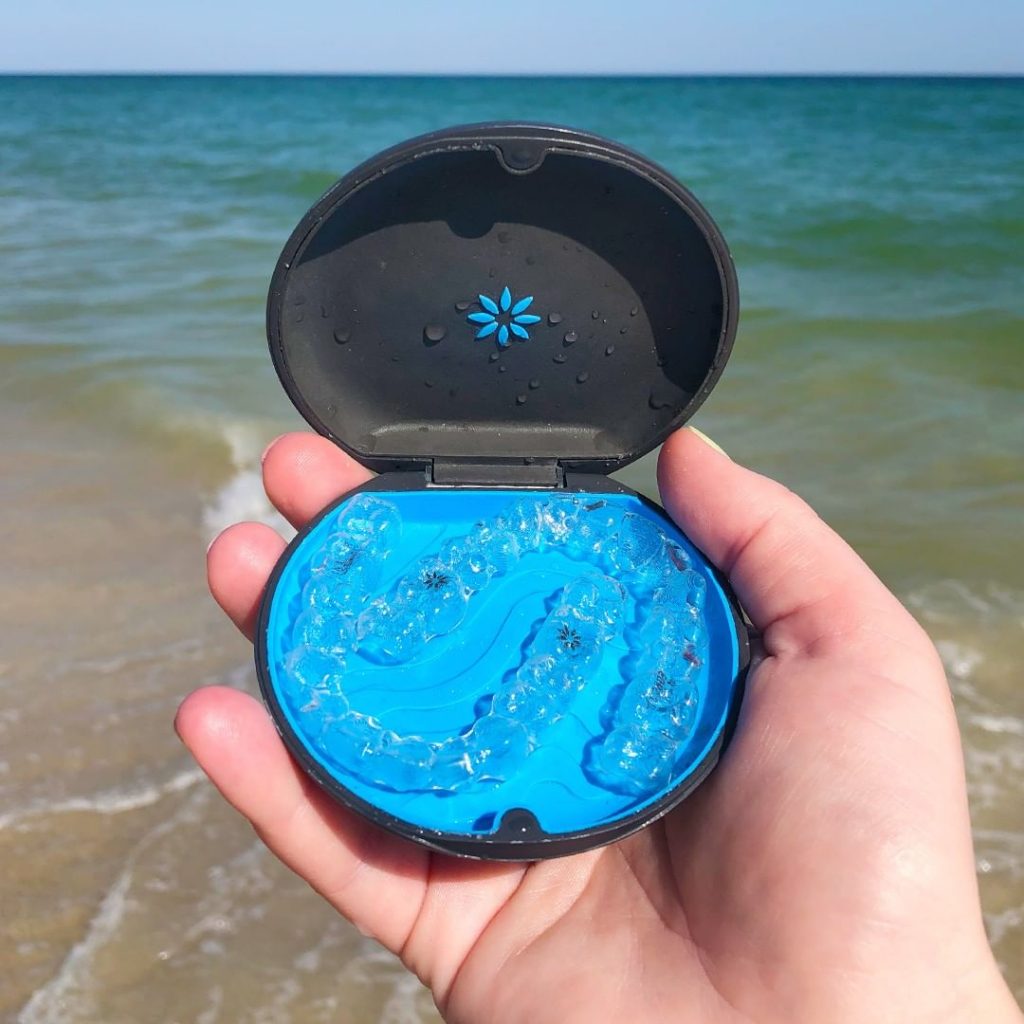
Keep your aligner case with you. Store your aligners in the case before eating so they cannot be damaged or lost. After eating, rinse both your teeth and your aligners and put them back in. Avoid wrapping aligners in a napkin — they are easily thrown away or damaged that way.

How do I take my aligners out?
Take your time when removing your aligners:
- On one side of your mouth, use a fingertip on the inside of a back tooth to ease the aligner gently off the molar.
- Repeat this on the other side of your mouth before trying to remove the aligner completely.
- Once the aligner is free from the molars on both sides, slowly and gently lift it away from your teeth with your fingertips.
Tips
- Rinse the aligner with water straight away, shake off the excess and store it in its case.
- To avoid damage, do not remove your aligners unnecessarily.
- Take extra care when several attachments are in place.
- Never use excessive force to bend or twist an aligner to remove it.
- Never use sharp objects to remove your aligners.
Lost or broken an aligner?
If an aligner is lost or broken, tell your orthodontist straight away. They will usually advise you to move to your previous or next set immediately, or arrange a replacement for the set you have lost.
What should I do with old aligners?
Old aligners can be disposed of with your household plastics. We do recommend keeping your most recent set, as they can act as a temporary back-up if your current aligners are damaged or lost. If you have any problems, contact your orthodontist, who will advise you.
How to clean your Invisalign aligners
Wash your hands thoroughly with soap and water before handling your aligners.
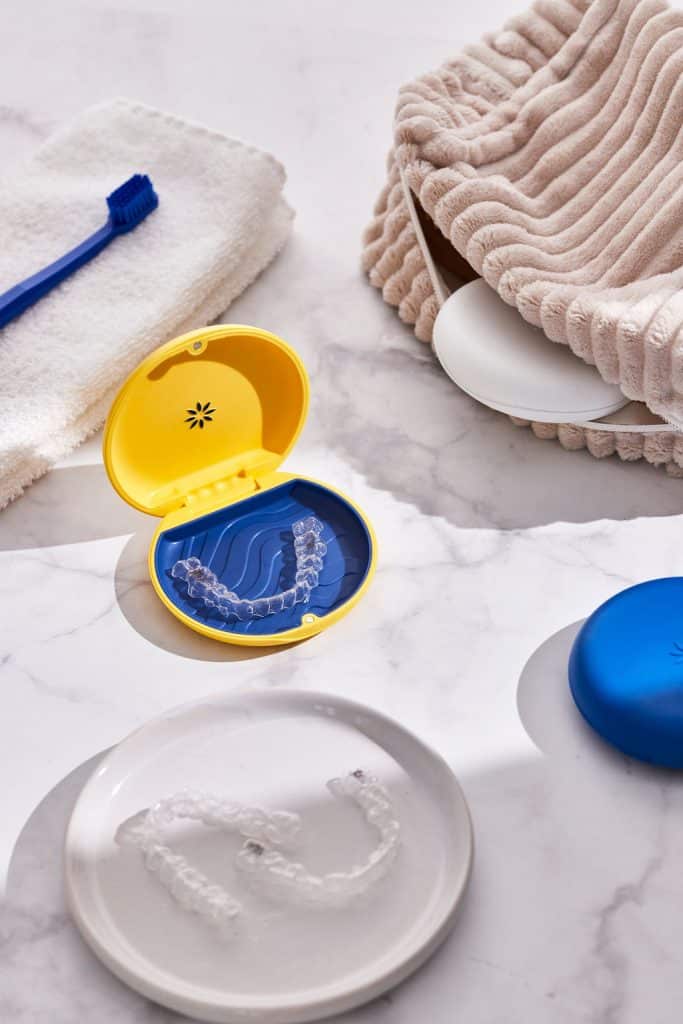
Clean your aligners every time before you put them back in. Use a soft toothbrush with water and a small amount of toothpaste. Many people find it easiest to brush the outside of the aligners while they are still on the teeth, then take them out to clean the inside surfaces.
Tip: rinse each aligner thoroughly with water after cleaning. Using a dedicated aligner-cleaning product once a week (or as needed) also helps.
Important: do not clean your aligners with denture cleaner and do not soak them in mouthwash. These can damage the surface, making the aligners cloudy and more visible.
When should I book an emergency appointment?
You will normally see your orthodontist every 7–10 weeks. Book an earlier appointment if you have unusual pain when wearing your aligners, or if one of the attachments on your teeth becomes damaged.
What to avoid
Looking after your teeth and aligners keeps your treatment on track:
- Avoid sticky or hard, crunchy foods, which can damage your aligners.
- Brush after every meal and floss regularly.
- Avoid caffeinated drinks, which can cause discolouration of the aligners.
- Avoid smoking, which also stains the aligners.
- Avoid contact sports and similar activities that could damage or dislodge your aligners.
Follow these simple steps and you will soon enjoy the benefits of Invisalign and a smile you are proud of.

Local anaesthesia in dentistry | From fear to painless treatment
Anaesthesia is used in most dental procedures to keep the patient comfortable, and local anaesthesia is used most often. Read more about how it works.

Snoring | Causes, symptoms and solutions
Snoring can be more than a night-time nuisance, it may point to more serious conditions such as sleep apnea. Learn the causes, risks and solutions.
How to prevent gum recession? Causes, symptoms and treatment
Gum recession can lead to serious dental problems, but with early action and consistent prevention you can keep your gums healthy.
