


Medically reviewed by Pia Slana, dentist · Last updated: July 2026
- Dental prosthetics replaces missing teeth to restore chewing, speech, aesthetics and confidence.
- Options range from removable complete and partial dentures to implant-supported dentures and fixed bridges, crowns and veneers.
- Treatment follows a clear path: examination and imaging, planning, a painless 3D scan, laboratory fabrication and fitting.
- Choose on quality of materials and the dentist’s experience, not price alone — durable solutions cost less in the long run.
Introduction to dental prosthetics
Dental prosthetics is one of the most important branches of modern dentistry, as it allows patients to replace missing teeth and restore function, aesthetics and comfort in the oral cavity. Losing a tooth can greatly change the appearance of your smile, affect chewing, cause neighbouring teeth to shift, worsen pronunciation and place additional strain on the remaining teeth and the jaw joint. The role of prosthetics is therefore more than merely aesthetic, because by restoring lost teeth it takes care of the overall restoration of oral health.
At OrthoDental, both removable and fixed dental prosthetics are carried out to a high professional standard, with the help of digital diagnostics, CAD/CAM technology and quality materials that make exceptionally precise, natural and durable solutions possible. Whether it is a single missing tooth or a complete reconstruction of the entire jaw, the goal is always the same: to restore the patient’s natural appearance, confidence and tooth function.
Types of dental prosthetics
Dental prostheses are available in various forms: fixed dental prosthetics, removable dental prosthetics and dentures. The NHS provides a general overview of dentures and tooth replacement.
Complete dentures
A complete denture is a solution for patients who have lost all their teeth in one or both jaws. It restores basic chewing function and aesthetics, and is made from quality acrylic that adapts precisely to the shape of the jaw. Although it is not as stable as implant-based solutions, it is an affordable and quick option. A good fit matters, so fabrication takes into account the anatomy, bite and facial aesthetics.
Partial denture
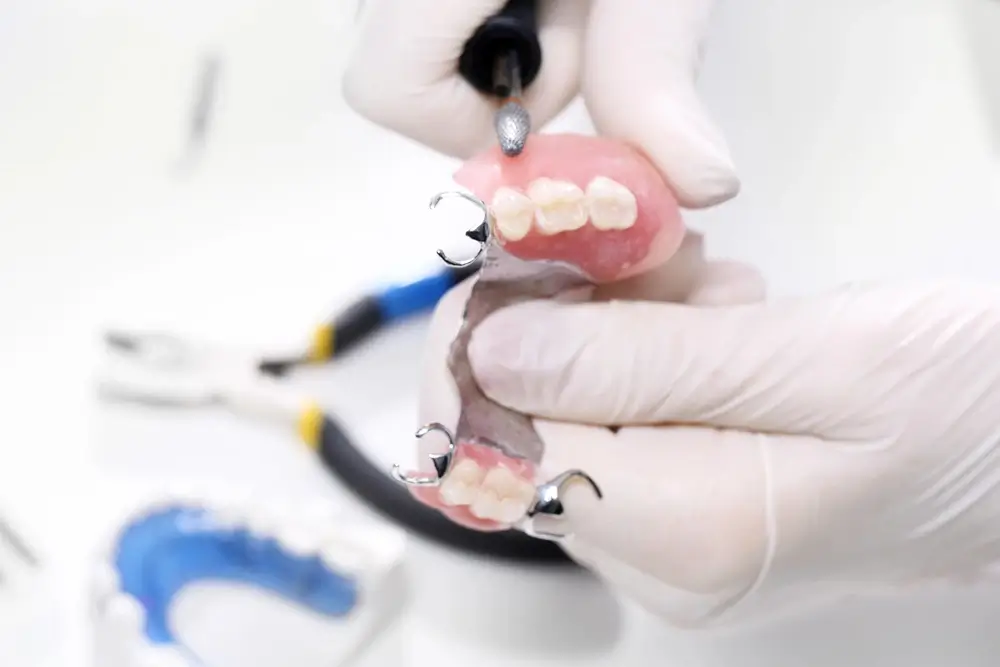
A partial denture is used when several teeth are missing, but not all. It preserves the remaining teeth while filling the gaps and restoring chewing function and bite stability. It suits patients looking for a more affordable solution or who, for anatomical reasons, are not suitable candidates for implants.
Implant-supported denture
This combines implants with a removable denture, which the implants stabilise and prevent from moving. It is suitable for people who have problems with classic dentures that move while speaking or eating. The implants provide anchorage, while the denture remains removable and easy to clean — a good choice for more comfort, greater chewing power and stability without a fixed bridge on implants.
Fixed dental prosthetics: the bridge
A bridge is a fixed prosthetic that replaces one or more missing teeth by being attached to the adjacent teeth. The adjacent teeth are prepared for dental crowns, and the bridge is permanently cemented. Bridges provide a natural appearance, good functionality and a long lifespan, especially when made from zirconia or high-quality ceramic.
Dental crowns and veneers
Dental veneers or dental crowns are intended for teeth that are damaged or severely weakened by decay or endodontic treatment. A crown restores the tooth’s shape, strength and colour and protects it from further damage. At OrthoDental, crowns are most often made from e.max ceramic or zirconia, which ensure strength and a completely natural appearance, especially on front teeth.
Ask a specialist about your options
How prosthetic treatment works
Prosthetic treatment begins with an initial examination, where the dentist checks the condition of the teeth, gums and oral cavity and performs basic diagnostics. If necessary, they take an orthopantomogram (OPG) or CBCT image, which allows a precise assessment of the bone, roots, remaining teeth and anatomical structures. Based on the examination and a discussion of your wishes and needs, the most suitable prosthetic solution is chosen.
The treatment planning phase
An experienced dentist always considers the functional aspects of the bite, facial aesthetics, the shape of the lips and your natural smile. They present all the options, advantages and disadvantages of each solution and prepare a time and financial plan for the therapy. It is crucial that you are informed of all the steps and understand how the new prosthetics will affect everyday life.
A 3D scan instead of an impression tray
Once the plan is confirmed, a painless digital scan follows. At OrthoDental we often use intraoral scanners, which enable an exceptionally precise 3D image of the dentition without unpleasant classic impressions. The digital model allows better transfer of information to the dental laboratory and more precise planning.
The fabrication phase
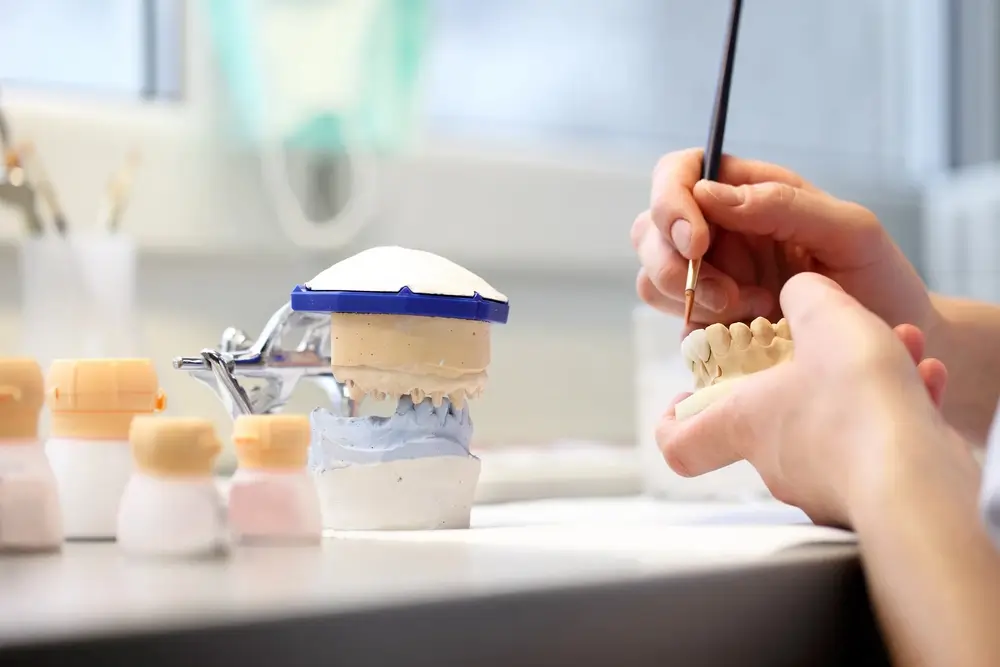
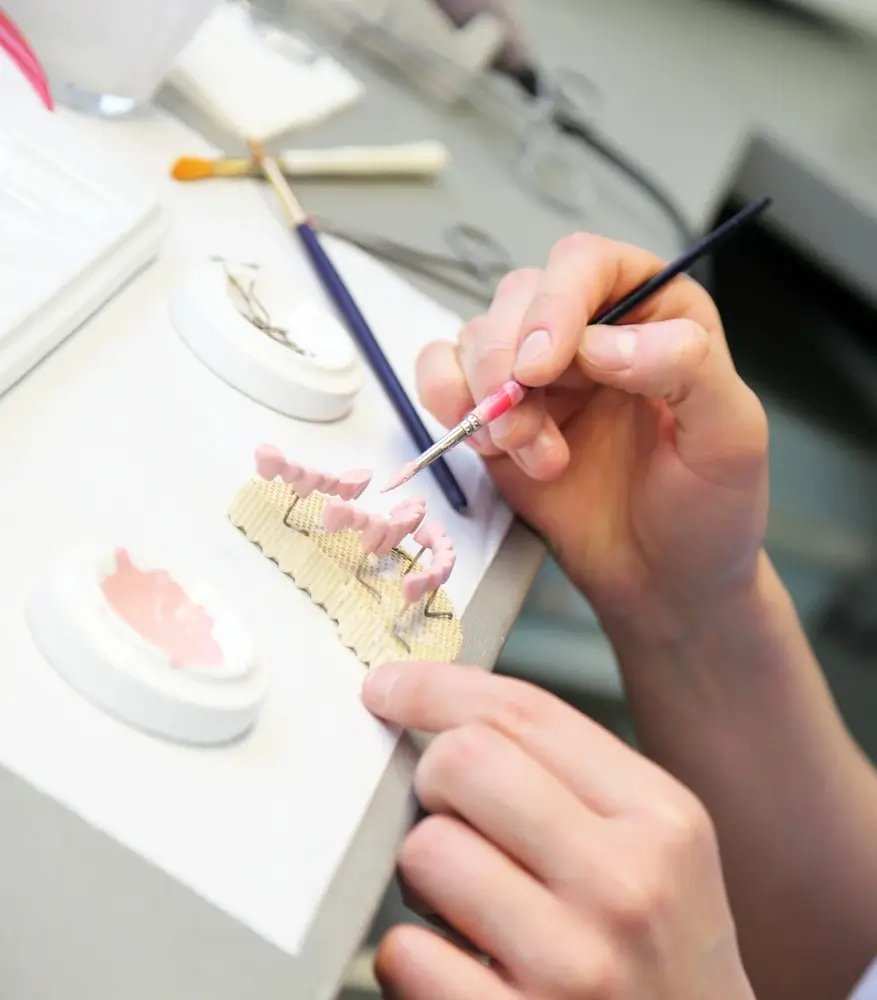
A dental technician makes an individual prosthetic solution in the laboratory; for fixed prosthetics CAD/CAM technology is increasingly used, allowing computer planning and machine fabrication from ceramic or zirconia with exceptional precision. Removable prosthetics require that a model of the jaw is made first, on which the correct bite height, tooth position and aesthetics are determined.
Fitting the dental prosthetics
The dentist first checks the fit, bite, colour and shape and makes minor corrections if needed. When function and aesthetics are perfectly aligned, the bridge or crown is permanently cemented, and a denture is handed over with detailed instructions for use and hygiene. There may be a period of adjustment, especially with removable dentures, so control visits are frequent in the first weeks.
Start with a first examination
Tips for saving money and choosing the best solution
When choosing dental prosthetics, do not choose on price alone, but above all on the quality of the materials used and the experience of the dentist. Cheaper services may seem attractive at first glance, but often do not guarantee long-term stability and refined aesthetics. Ask about the materials used, the warranty, the dentist’s experience and the techniques the laboratory uses. It often turns out that the most cost-effective solutions in the long run are those with the longest lifespan that require the fewest repairs.
Trends in Slovenia
Dental prosthetics in Slovenia is advancing rapidly, as more and more practices rely on digital technologies such as CAD/CAM systems, iTero scanning and same-day fabrication of ceramic elements. Implant-supported solutions are increasingly popular, as they provide high stability, functionality and a natural appearance, and patients increasingly opt for complete dentures, crowns, implants and veneers.
Dental prosthetics solutions for everyone
Dental prosthetics ensures we can replace missing teeth and offer every patient a solution for the best possible quality of life. When choosing, trust a specialist, be informed about all the options and pick the solution that provides the most comfort, aesthetics and stability in the long term.
Frequently asked questions
Which prosthetic solution is right for me?
It depends on how many teeth are missing, the condition of your jawbone and your budget. A partial denture suits a few missing teeth; a complete or implant-supported denture suits complete tooth loss; bridges and crowns restore individual damaged teeth. The dentist decides with you at an examination.
Is the 3D scan uncomfortable?
No. Intraoral scanning is painless and replaces the unpleasant classic impression tray, while giving the laboratory a more precise model.
How long does prosthetic treatment take?
Simple crowns or bridges take a few visits. Complete dentures usually follow a temporary denture while the jaw stabilises, and implant-supported solutions add a healing period of several months.
How do I care for my new prosthetics?
Fixed prosthetics are cleaned like natural teeth; removable dentures need daily cleaning with a special cleaner (never toothpaste) and should be removed at night. Regular check-ups remain essential.
Related reading
Ready for a healthy, confident smile?
Book a dental examination in Ljubljana or Kozina.


Dental bridge | How to replace missing teeth
A dental bridge replaces one or more missing teeth and restores chewing, speech and aesthetics. Learn about materials, the procedure and prices at OrthoDental.

Endodontics – root canal treatment
Endodontics deals with diseases of the dental pulp. Learn when root canal treatment is needed, how it is performed, its success rate, and what recovery looks like.
Invisalign vs other clear aligners: Spark, Angel and Shine compared
A clinically reviewed comparison of Invisalign, Spark, ClearCorrect, Shine, Angel Aligner and mail-order aligners—and why planning matters more than plastic.
