


Medically reviewed by Pia Slana, dentist · Last updated: July 2026
- Dentures restore chewing, speech and confidence after tooth loss, whatever your age.
- Removable options include total and partial dentures and a snap-on denture on two implants; All-on-4 and All-on-6 are fixed, implant-supported solutions.
- With proper care an acrylic denture lasts around 5 years and a metal-based denture around 7 years.
- Never clean a denture with toothpaste, and take it out at night to rest your gums.
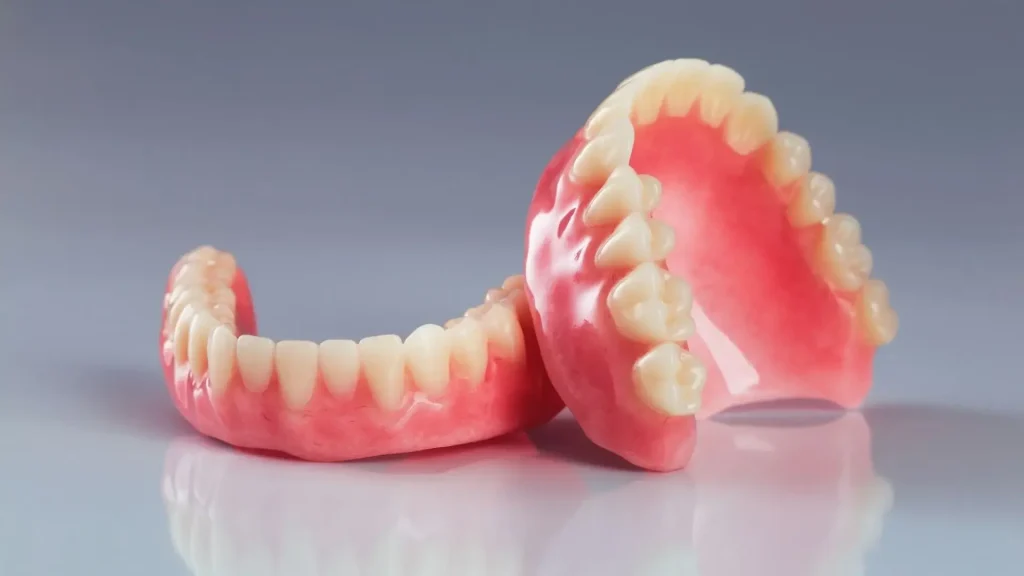
A denture is one of the best solutions for restoring the smile of people of all ages – from tooth loss due to injury to the natural loss of teeth with age. Modern dentures are designed to fit the mouth and function naturally, restoring confidence, chewing and speech.
There are several types of dentures – removable (total, partial, on two implants) and fixed implant-supported dentures (All-on-4 or All-on-6). Below we explain what they are, how to choose the right one, how they are made and how to care for them. Looking for prices? See the detailed denture price list.
I need a denture – book a first exam
Types of dentures available to you
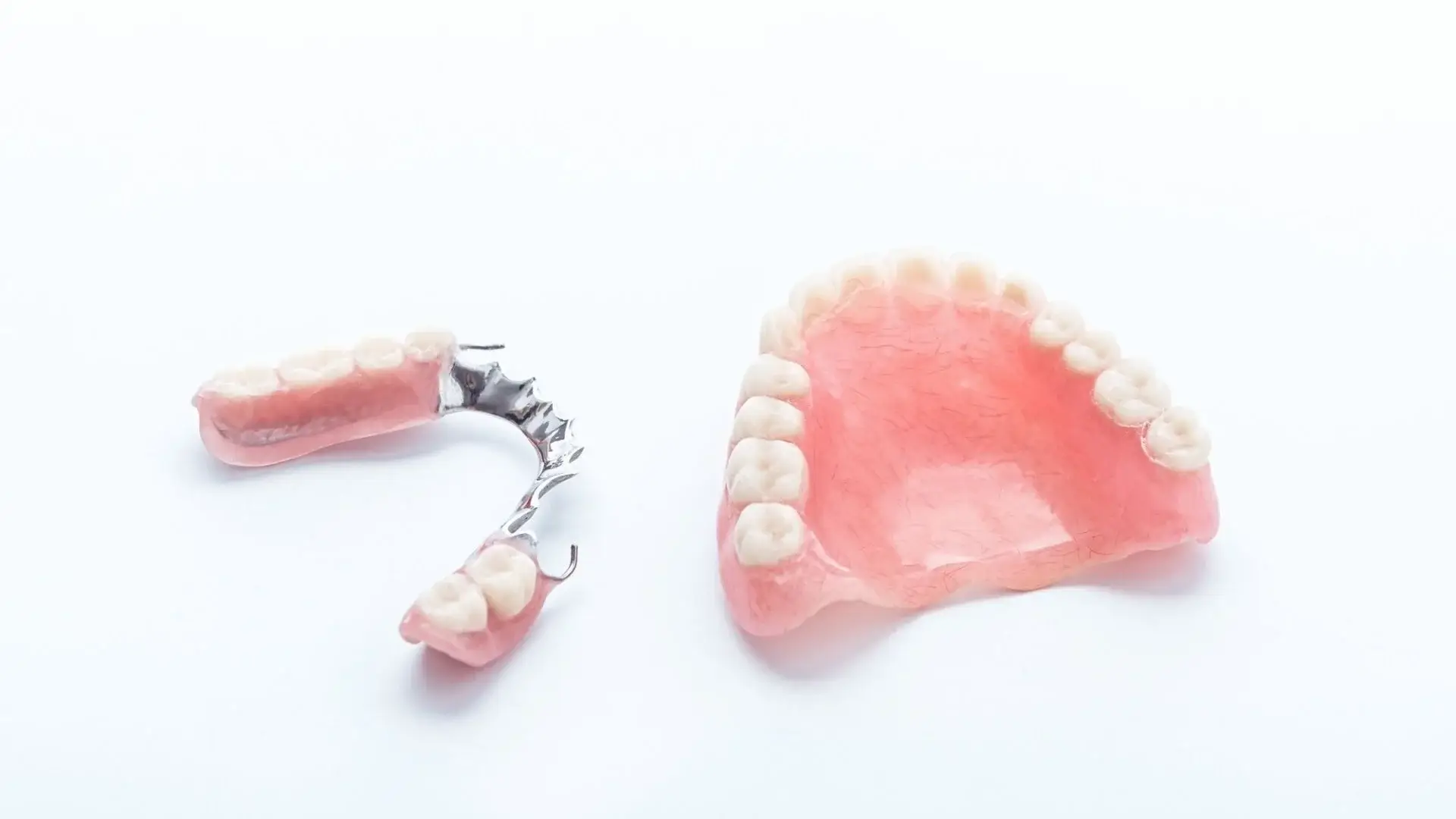
The choice of denture depends on your needs, the condition of your mouth and your wishes. Removable dentures include the total denture, the partial denture and the total denture on two implants, while fixed options include the implant-supported denture (All-on-4 or All-on-6). An overview of how dentures work is also available from the NHS guide to dentures.
Total denture
The total removable denture is the solution for those who have lost all their teeth. It replaces the missing teeth and the lost dental ridges. After extraction, a temporary denture is often made first; once the jaw stabilises (usually within 6 to 12 months), the permanent denture follows.
Partial denture
The partial denture replaces a few missing teeth, is removable and easy to clean. In addition to aesthetics, it helps maintain the correct position of the remaining teeth and prevents them from drifting.
Removable denture on two implants (snap-on denture)
Two implants give the denture significantly better stability and comfort than a conventional denture – less slipping and pressure on the gums, while it can still be removed for cleaning.
Fixed implant-supported denture (All-on-4 / All-on-6)
The implant-supported denture is attached to implants in the jawbone, providing a permanent and stable foundation. The All-on-4 method uses four implants, while All-on-6 uses six implants for even greater stability.
Ask us which denture suits you

Which denture is best for you?
There is no single right denture for everyone – the choice depends on oral health, the number of missing teeth, lifestyle and budget. That is why a consultation with a dentist is important: they will make the correct diagnosis and present the advantages and disadvantages of the individual solutions.
Aesthetics and functionality
A quality denture must look natural while allowing effective chewing, clear speech and comfortable wear. At OrthoDental we use 3D dental scanners and high-quality biocompatible materials, which ensure a precise fit and a long service life.
How is a denture made?
The process starts with an examination and an impression (or 3D scan) of the jaw, followed by fabrication in a dental laboratory and adjustment of the fit. With a total denture, the usual route is via a temporary denture to the permanent one, once the conditions in the mouth have stabilised.
Getting used to a new denture and relieving discomfort
Wearing a denture can feel unusual for the first few days. It helps to get used to it gradually (a few hours a day at first), use adhesive creams for a better fit if needed, maintain consistent oral hygiene and rinse with salt water. If the denture rubs or is too loose, have your dentist adjust it – there is no need to put up with pain.

Denture maintenance and care
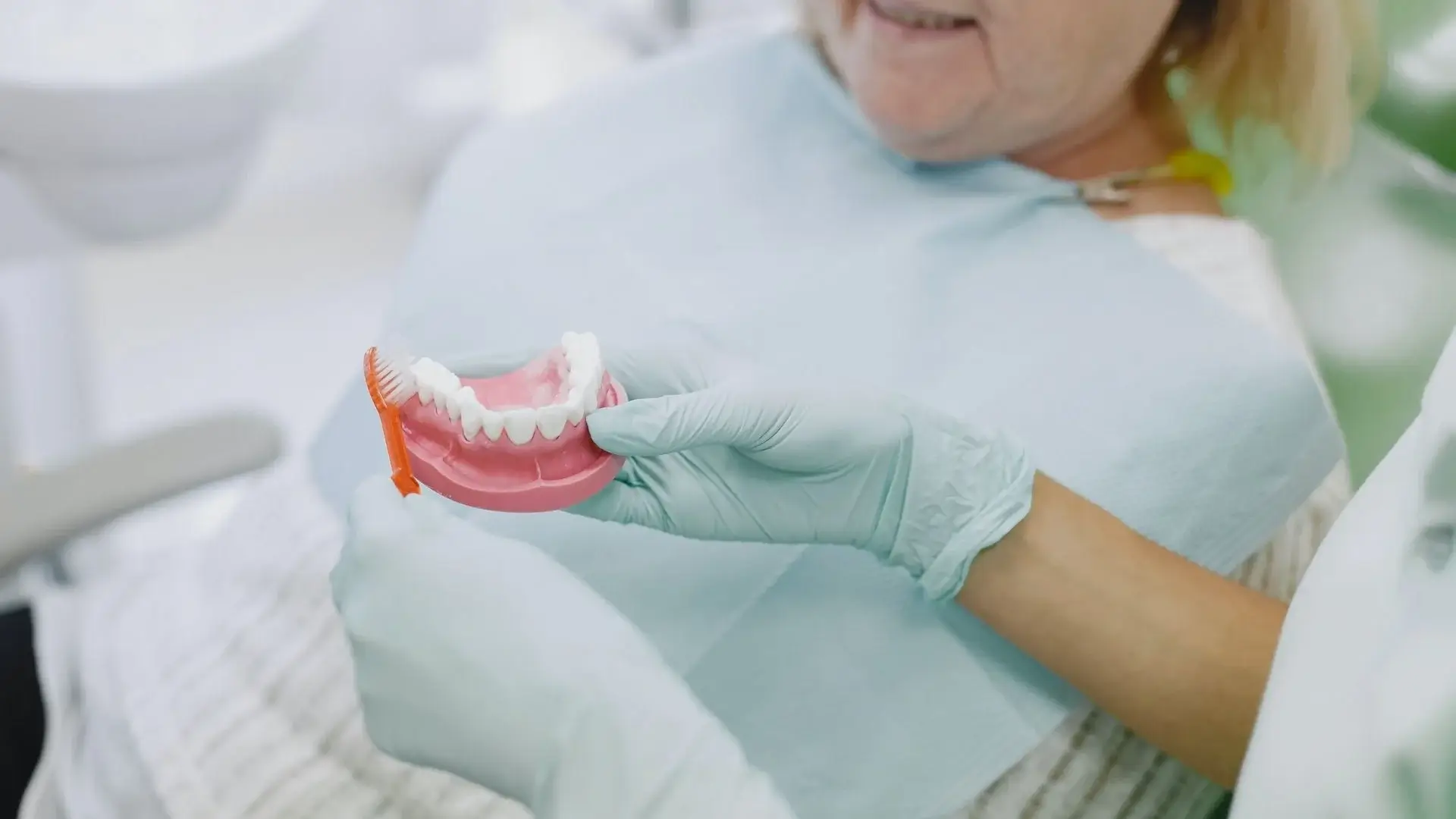
Clean the denture every day with a special cleaner or mild soap – never with toothpaste, which is abrasive. Rinse it under running water after meals. Do not wear it at night; store it in a solution or clean (not hot) water to keep its shape. Even with a denture, regular dental check-ups remain essential to check the fit and the health of your gums.
Denture price
The price depends on the type of denture and the materials. At OrthoDental, fabrication is self-pay and without waiting lists, and payment in instalments is also possible. You can find the detailed and up-to-date price list (partial, total, implant-supported) on the denture price page. Interested in other prosthetic solutions? Take a look at dental prosthetics.
Frequently asked questions about dentures
Which type of denture is right for me?
It depends on the number of missing teeth and the condition of the jaw: a partial denture for individual missing teeth, and a total denture or an implant-supported denture for complete tooth loss. The right solution is determined by the dentist at an examination.
How long does it take to make a denture?
Fabrication usually takes several visits. With a total denture, the usual route is via a temporary denture to the permanent one, once the jaw has stabilised after extraction (approximately 6 to 12 months).
Does wearing a denture hurt?
The first few days can feel unusual or slightly uncomfortable until the mouth gets used to it. If there is any rubbing, we adjust the denture so that wearing it is not painful.
Can I eat and speak normally with a denture?
Yes. After a short adjustment period, most people chew and speak normally again; an implant-supported denture provides additional stability.
How long does a denture last?
With proper care, an acrylic denture usually lasts around 5 years and a denture with a metal base around 7 years, after which a renewal makes sense.
Can I sleep with my denture in?
It is not recommended. Removing it at night relieves the gums and extends the life of the denture.
Related reading
Ready for a confident smile at any age?
Book a dental examination in Ljubljana or Kozina.


Teeth polishing | Benefits, procedure and price
Teeth polishing removes surface stains and gives your teeth a smooth, fresh feel. At OrthoDental in Ljubljana, polishing both dental arches costs €50.

Oral hygienist Ljubljana | Professional tartar cleaning for 60 €
An oral hygienist in Ljubljana for 60 € offers professional tartar cleaning in both dental arches at a clear price, with no hidden costs. The visit includes tartar removal, cleaning of soft deposits and advice for better oral hygiene.

Different types of dental implants
Dental implants have become a popular replacement for missing teeth due to their effectiveness and durability. However, there are several types of implants that can be used to solve a variety of dental problems.
