


Medically reviewed by Gordana Čižmek, dr. dent. med., spec. · Last updated: July 2026
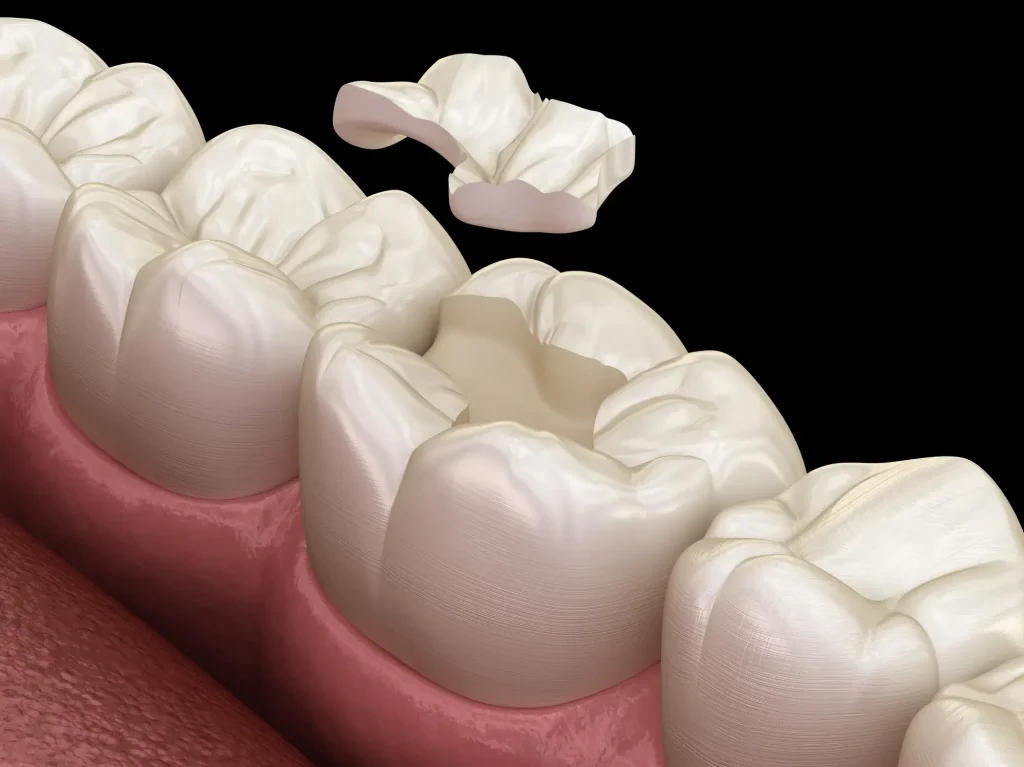
- Inlays and onlays are laboratory-made restorations that repair damaged back teeth more precisely and less invasively than traditional fillings.
- An inlay fills the inner biting surface; an onlay covers one or more cusps; an overlay restores most or all of the tooth.
- Ceramic versions are biocompatible, colour-matched to the tooth and highly wear-resistant.
- Your dentist will recommend the right option after an examination — the goal is to preserve as much healthy tooth as possible.
In modern dentistry there are various methods for restoring damaged or worn teeth that allow patients to keep the natural appearance of their smile while ensuring functionality and the durability of the restored teeth. Among these methods, dental inlays and onlays are popular, offering high-quality solutions for different degrees of tooth damage.
Inlays and onlays combine precision, aesthetics and durability, treating damaged teeth in a way that is less invasive than traditional fillings. They are made from high-quality materials such as porcelain and composite, which provide strength and a natural appearance.
When does tooth structure need to be replaced
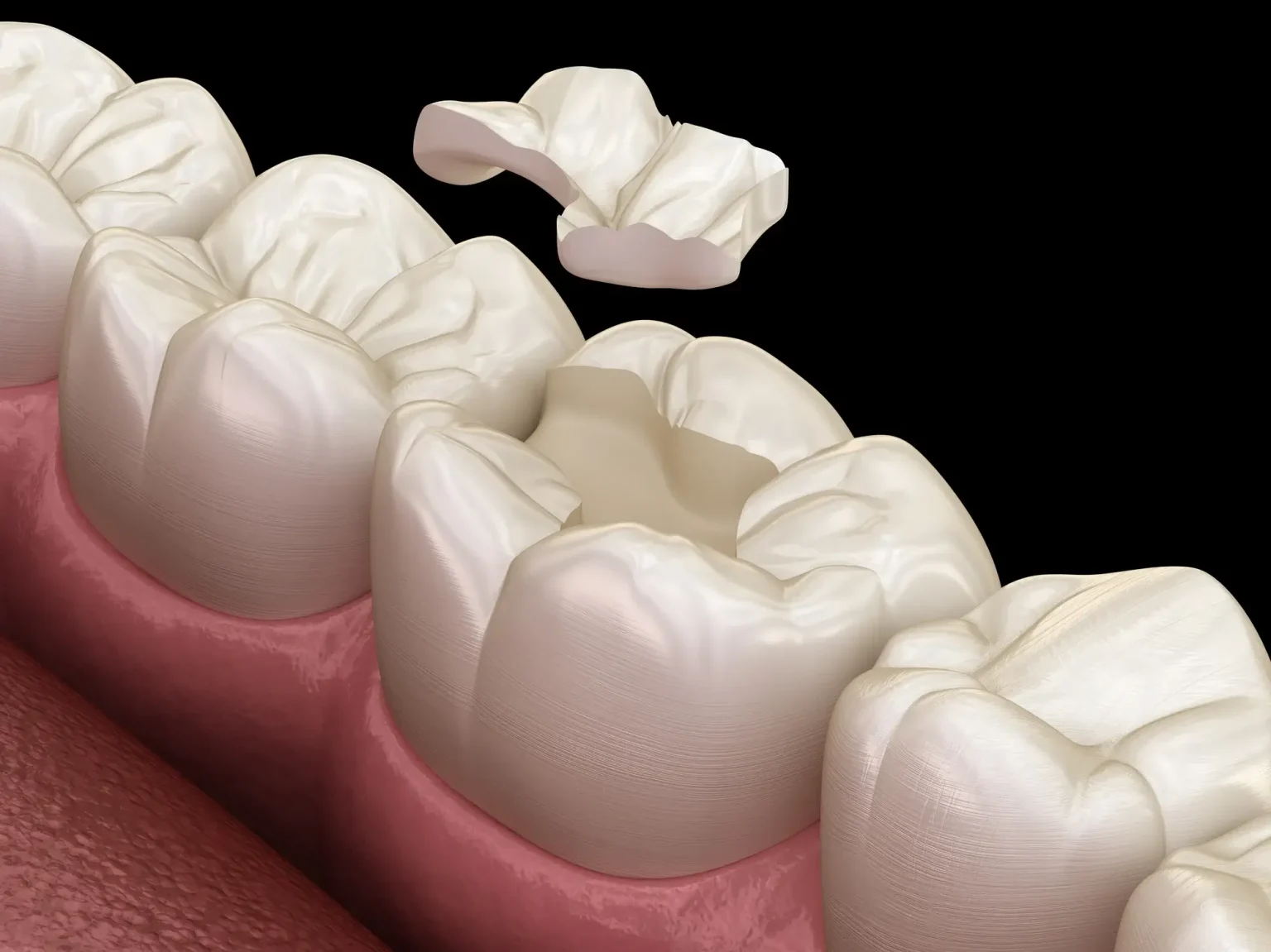
Healthy tooth structure is key to overall oral health. When a tooth is damaged by decay, fracture or wear, the missing or damaged structure needs to be replaced to preserve the tooth’s function and prevent further deterioration. An inlay and an onlay are ideal solutions, as they are made in a dental laboratory, where care is taken that they fit the shape of the tooth precisely and restore its functionality without sacrificing aesthetics.
How decay affects tooth enamel
Decay is one of the most common dental problems, affecting tooth enamel and potentially leading to more serious issues if not treated in time. Acid-producing bacteria attack the enamel and cause breakdown, which can lead to a hole in the tooth or even tooth loss. Early detection and treatment are crucial for maintaining dental health.
| Habit | How often | Why it matters |
|---|---|---|
| Brushing | Twice a day | Removes plaque |
| Flossing | Daily | Cleans between teeth |
| Professional cleaning | Every 6 months | Removes tartar |
Traditional solutions: amalgam fillings
Amalgam fillings were the standard solution for decades. They are made of a mixture of metals, including silver, mercury, copper and zinc, which provide strength and durability. Although effective, they are increasingly being replaced by more modern materials for aesthetic reasons — ask your dentist at your next OrthoDental visit about the different options, or read our comparison of white and amalgam fillings.
The use of amalgam in the history of dentistry
The use of amalgam in dentistry dates back more than a century and was for a long time a popular choice due to its durability. Advances in dental materials have since enabled alternatives that are more aesthetically acceptable and contain no mercury.
Inlays: a precise alternative to fillings
An inlay is a precise and aesthetically refined alternative to traditional fillings, especially when restoring back teeth. Made from durable materials such as porcelain or composite, it restores the tooth substance with a high precision of fit and provides a long-lasting solution.
The biocompatibility of inlays and the advantages of ceramic
Ceramic inlays are known for their biocompatibility: the materials are friendly to the body and do not cause unwanted reactions. Ceramic also provides aesthetic advantages, as the colour can precisely match the natural colour of the tooth, allowing an almost invisible restoration, together with exceptional resistance to wear.
When should you choose an inlay?
An inlay is especially suitable for larger tooth damage, where traditional fillings would not provide sufficient strength or would be aesthetically less satisfactory. It preserves more healthy tooth structure, as it requires less removal of tooth tissue, and offers a better fit to the shape of the tooth, ensuring better functionality and a lower risk of fracture.
The technical procedure for making an inlay
Making an inlay begins with thorough cleaning and preparation of the tooth cavity. The dentist then takes a precise impression of the tooth, which is sent to the dental laboratory, where a custom inlay is made. This ensures the inlay fits the cavity perfectly, allowing precise restoration with minimal impact on the rest of the tooth.
The main difference between an inlay and traditional fillings
Inlays are made outside the mouth and then cemented into place, which allows a better fit and strength of the restoration. Traditional fillings are formed directly in the tooth cavity, which can sometimes limit the precision and strength of the material.
Onlays and overlays: more extensive solutions
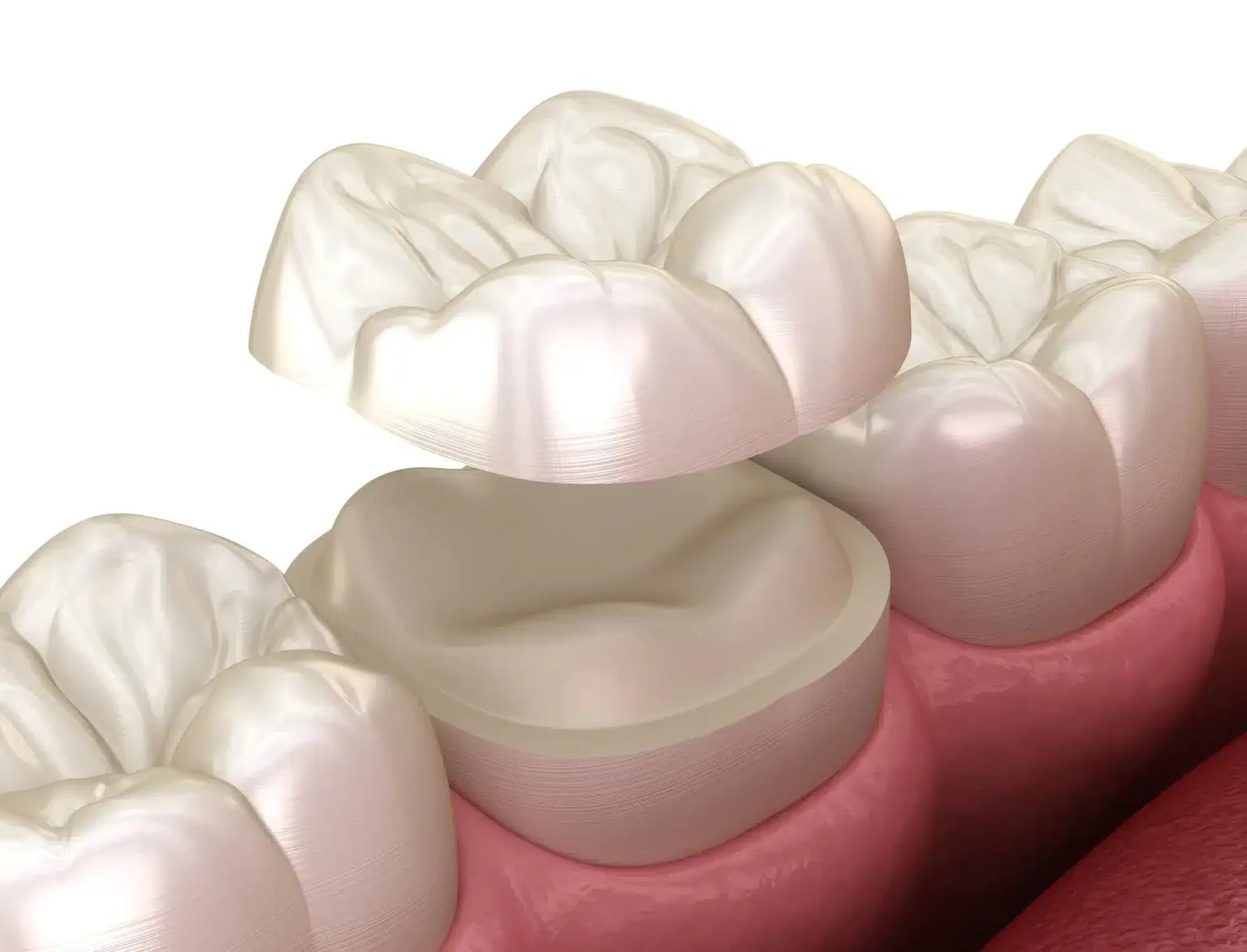
Onlays and overlays are used for more extensive tooth restorations. Onlays cover one or more of the biting surfaces of the tooth, while overlays restore a larger part of the tooth or the entire tooth. Both techniques provide a complete restoration of teeth that have suffered extensive damage.
The advantages of onlays and overlays
They preserve more healthy tooth tissue, allow a precise colour match with existing teeth and improve the strength of the restored tooth, offering better long-term results and reducing the need for further restorations.
Differences between inlay, onlay and overlay
The main difference is the extent of the tooth surface they restore.
- An inlay restores the inner part of the biting surface — suitable for small to medium cavities where a traditional filling might not be strong or aesthetic enough.
- An onlay covers one or more cusps — used when the damage is too large for an inlay but not extensive enough to need a full crown.
- An overlay covers a larger part of the tooth or the whole tooth, acting as a kind of “cap” — used for extensive damage or wear beyond what inlays or onlays can restore.
The choice depends on your specific needs regarding aesthetics and functionality. It is essential to consult your dentist, who can recommend the best option after a thorough examination.
Frequently asked questions
Is an inlay better than a filling?
For larger cavities on back teeth, an inlay is usually stronger, longer-lasting and a more precise fit than a directly placed filling. For small cavities, a white filling is often sufficient.
How long do inlays and onlays last?
Ceramic inlays and onlays are highly wear-resistant and, with good oral hygiene and regular check-ups, typically last many years — often longer than conventional fillings.
Does the procedure hurt?
The tooth is prepared under local anaesthesia, so the procedure should not be painful. Brief sensitivity afterwards is normal.
How many visits do I need?
Usually two: one to prepare the tooth and take the impression, and one to cement the finished restoration made in the laboratory.
Related reading
Ready for a healthy, confident smile?
Book a check-up at OrthoDental — expert care across 5 clinics in Slovenia, with no waiting list.


Tooth extraction price | How much does a tooth extraction cost?
How much does a tooth extraction cost? The price depends on the type of extraction – see OrthoDental’s clear, transparent price list.

Tooth bonding – when does dental bonding make sense?
Tooth bonding is a minimally invasive way to repair chipped, cracked or stained teeth. Learn when bonding makes sense, how the procedure works and how it compares to veneers and crowns.

Toothache | Causes, Types and How to Relieve It
What causes a toothache, the different types of tooth pain, and how to relieve it at home – plus when it’s time to see a dentist at OrthoDental.
