
Different types of dental implants

Medically reviewed by Gordana Čižmek, dr. dent. med., spec. · Last updated: July 2026

Dental implants are small posts fixed into the jaw that act as an artificial tooth root. They are a popular and effective way to replace missing or damaged teeth: they are designed to look and function like natural teeth and can improve both your oral health and your overall quality of life. Several types of implant are available, each with its own advantages.

Quick takeaways

  • Implants can replace a single tooth, several teeth, or a full arch (for example with All on 4).
  • The two main types are endosteal implants (placed in the jawbone) and subperiosteal implants (placed on the bone, under the gum).
  • Implants are made from titanium or ceramic (zirconia) – both are biocompatible.
  • At OrthoDental we place Straumann and Neodent implants, from €1,500.
  • The right implant for you is chosen by your dentist after a 3D scan.

What types of dental implants are there?

There are several types of dental implant and procedure. It is best to let your dentist help you choose the option that suits you, depending on your oral health and the condition of your mouth. Implants can replace one tooth or several teeth, which is why there are different types:

Single-tooth implant

If only one tooth needs replacing, your dentist places a single implant and fits one replacement tooth on top.

Multi-tooth implant

If you are missing several teeth, your dentist will usually suggest a multi-tooth implant with custom-made replacement teeth.

Whole-mouth implant

Solutions such as the popular All on 4 or All on 6 replace an entire arch in the upper or lower jaw on 4 or 6 implants.

Which dental implants are right for me?

Your dentist decides which implants are right for you after a 3D scan of your teeth, which assesses your oral health and any corrections needed. Broadly, dental implants fall into three groups that differ by the type of procedure and how they are placed.

Endosteal implants

Endosteal implants are the most common type of dental implant. They are placed directly into the jawbone and are made of titanium or ceramic. They are typically used for people who have healthy jaw tissue and enough bone density to support the implant. One advantage is their durability: they are designed to last a long time and provide a stable base for replacement teeth. However, fitting them can be time-consuming and requires surgery.

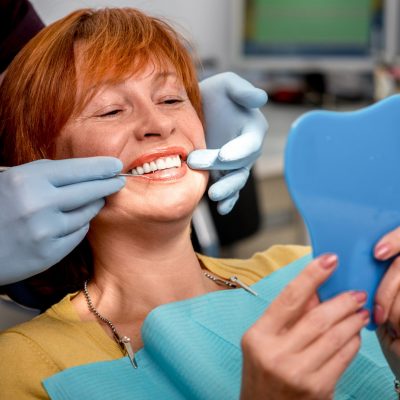
Smiling woman after dental implant treatment at OrthoDental

Subperiosteal implants

Subperiosteal implants are placed under the gum tissue and above the jawbone. They are usually used for patients who do not have enough healthy jawbone to support an endosteal implant, and are made of titanium or ceramic and fixed to the jaw with metal supports. One advantage is that they can be placed without extensive surgery; however, they may not be as stable as endosteal implants and may need replacing in future.

Dental surgeon reviewing a tooth X-ray before placing an implant

All on 4

All on 4 implants are designed to replace an entire arch of missing teeth. They are positioned so that a full arch of replacement teeth can be attached to them, and are usually used for patients who have lost all the teeth in an arch or have severe decay or damage.

Patient smiling after All on 4 implant treatment

What materials are implants made of?

Implants can be made from several materials. At OrthoDental we use only high-quality ceramic and titanium implants.

Ceramic implants

Ceramic dental implants are made of zirconium oxide, a biocompatible material that is highly resistant to corrosion and wear. One of their biggest advantages is their aesthetic appeal, as their tooth-like colour blends seamlessly with natural teeth. They are also hypoallergenic, so in most cases they do not cause an allergic reaction. Their high compatibility also makes them less likely to cause inflammation or irritation of the surrounding gum tissue – particularly important for patients who have gum disease or other oral-health problems.

Titanium implants

Titanium is the most commonly used material for dental implants thanks to its high biocompatibility, strength and durability. It is also highly wear-resistant with a long service life. A key advantage of titanium is its ability to integrate with the jawbone – a process known as osseointegration – which allows the implant to become a permanent part of the jaw and provide a stable, secure base for the replacement tooth. (Source: NHS)

Which implant brands do we use at OrthoDental?

At OrthoDental we use the renowned Straumann and Neodent brands, which offer a range of high-quality options to suit each patient. Their ceramic and titanium implants are known for their durability, strength and aesthetic appeal. Straumann implants are known for their high biocompatibility and durability and are therefore slightly more expensive: a Straumann implant costs €2,500, while Neodent implants are available for €1,500. Both brands are highly reputable and among the very best implant providers.

Which implants are right for you?

Choosing between ceramic and titanium implants can be a difficult decision, and it ultimately depends on your individual needs and preferences. It is important to work with a qualified dental professional who can guide you through the decision and make sure you receive the best possible care. At OrthoDental we provide personalised advice and top-quality service.

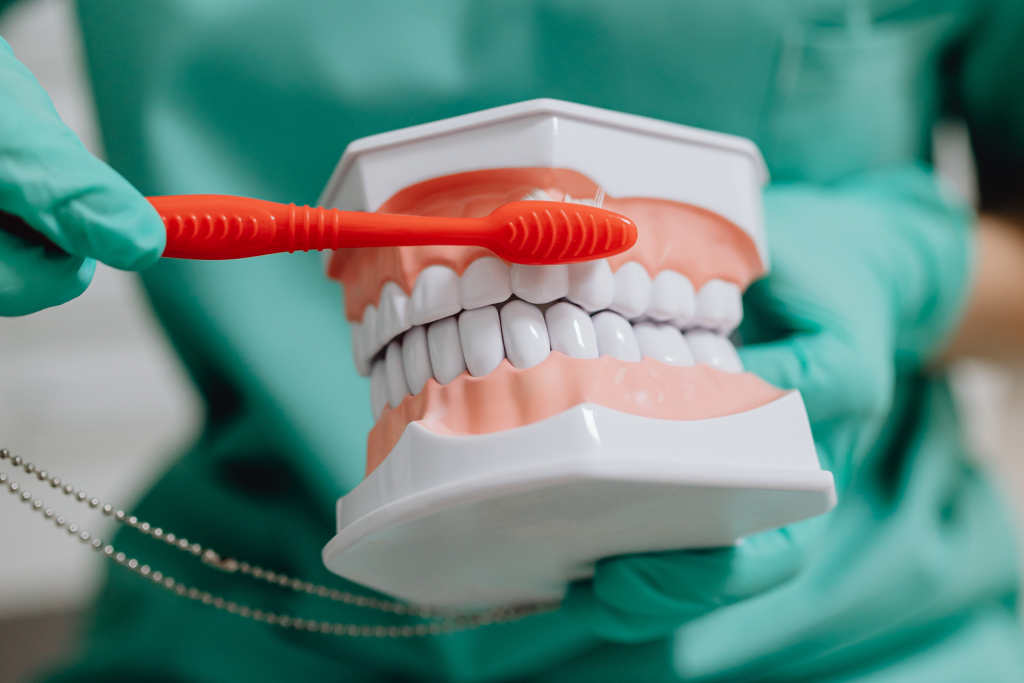
Dentist demonstrating implant care on a jaw model

Frequently asked questions

The two main types are endosteal implants, placed directly into the jawbone, and subperiosteal implants, placed under the gum and above the bone. Full-arch solutions such as All on 4 or All on 6 replace a whole row of teeth on 4 or 6 implants.

Titanium is the most widely used material because of its strength and its ability to osseointegrate with the jawbone. Ceramic (zirconia) implants are metal-free, hypoallergenic and blend in with natural teeth. The best choice depends on your needs and is decided together with your dentist.

A Neodent implant costs €1,500 and a Straumann implant costs €2,500. The final price depends on your individual case – book a first exam for a personalised assessment.

Your dentist decides after a 3D scan that assesses your oral health, bone density and any corrections needed. Book a consultation to find out which option suits you best.

Ready for a healthy, confident smile?

Book a free first exam at OrthoDental. Our team will assess your teeth with a 3D scan and recommend the implant option that is right for you – with no obligation.

5/5 - (3 votes)

Avtor prispevka

Gordana Čižmek

Gordana Čižmek

Gordana Čižmek, DMD, is an orthodontist and Clinical Director of the OrthoDental centre. She is a double specialist — a specialist in dentofacial (jaw and dental) orthopaedics and a specialist in paediatric and preventive dentistry. She graduated from the Faculty of Medicine, University of Ljubljana, in 1995, completed her specialization in paediatric and preventive dentistry in 2008, and her specialization in orthodontics in 2013. With more than two decades of clinical experience, she focuses on orthodontic diagnostics, the treatment of tooth and jaw irregularities in children, adolescents and adults, and digital planning of orthodontic therapy with invisible aligners such as Invisalign. As Clinical Director she leads the clinic's professional protocols and the planning of complex cases, ensuring individual, expert care for every patient at OrthoDental in Ljubljana, Slovenia.


Scroll to Top