


Medically reviewed by Pia Slana, dentist · Last updated: July 2026
- Tartar is hardened dental plaque — once it forms, no toothbrush can remove it; only professional cleaning can.
- It irritates the gums and can contribute to bleeding, bad breath, gum recession and periodontal disease.
- Never scrape tartar at home with sharp tools, soda or vinegar — you risk damaging enamel and gums.
- At OrthoDental in Ljubljana, tartar cleaning in both dental arches costs €60.
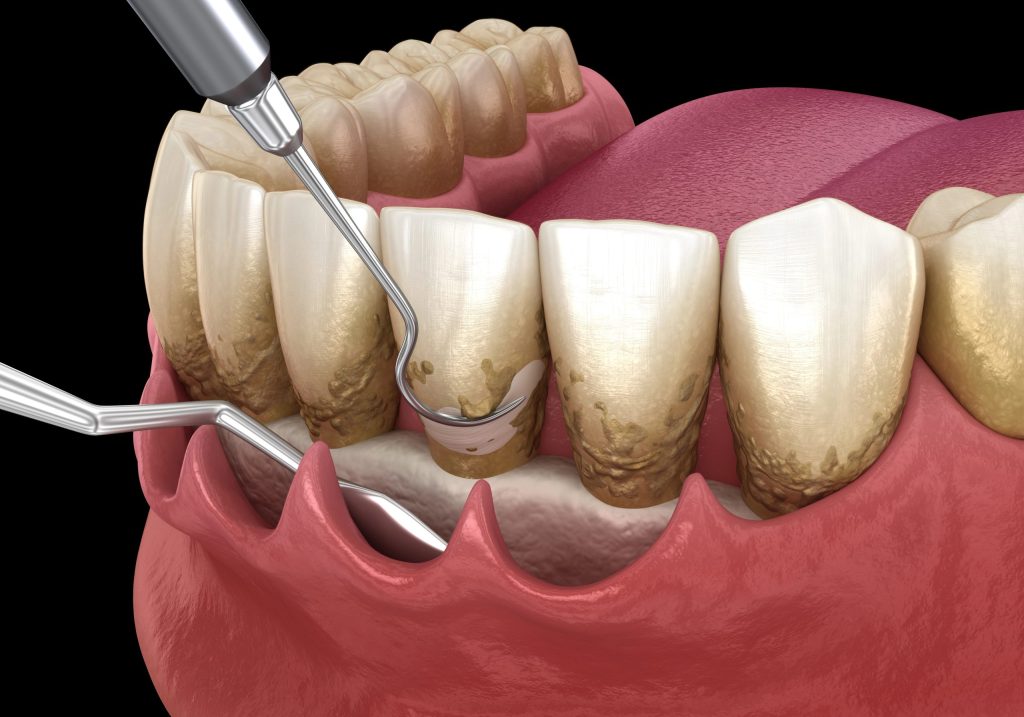
Dental tartar is one of those problems that many people only notice once their teeth are no longer smooth or when their gums start to bleed during brushing. Sometimes it shows up as a yellowish or brownish deposit along the gumline, but often we first feel it with the tongue, especially on the inner side of the lower front teeth.
Although tartar most often bothers us because of its appearance or bad breath, the problem is not only aesthetic. Hard deposits along the gums can irritate the tissues, worsen gum inflammation and make everyday tooth cleaning more difficult.
The good news is that tartar can be removed quickly and safely. It is important, however, not to try to do this yourself at home.
What is dental tartar?
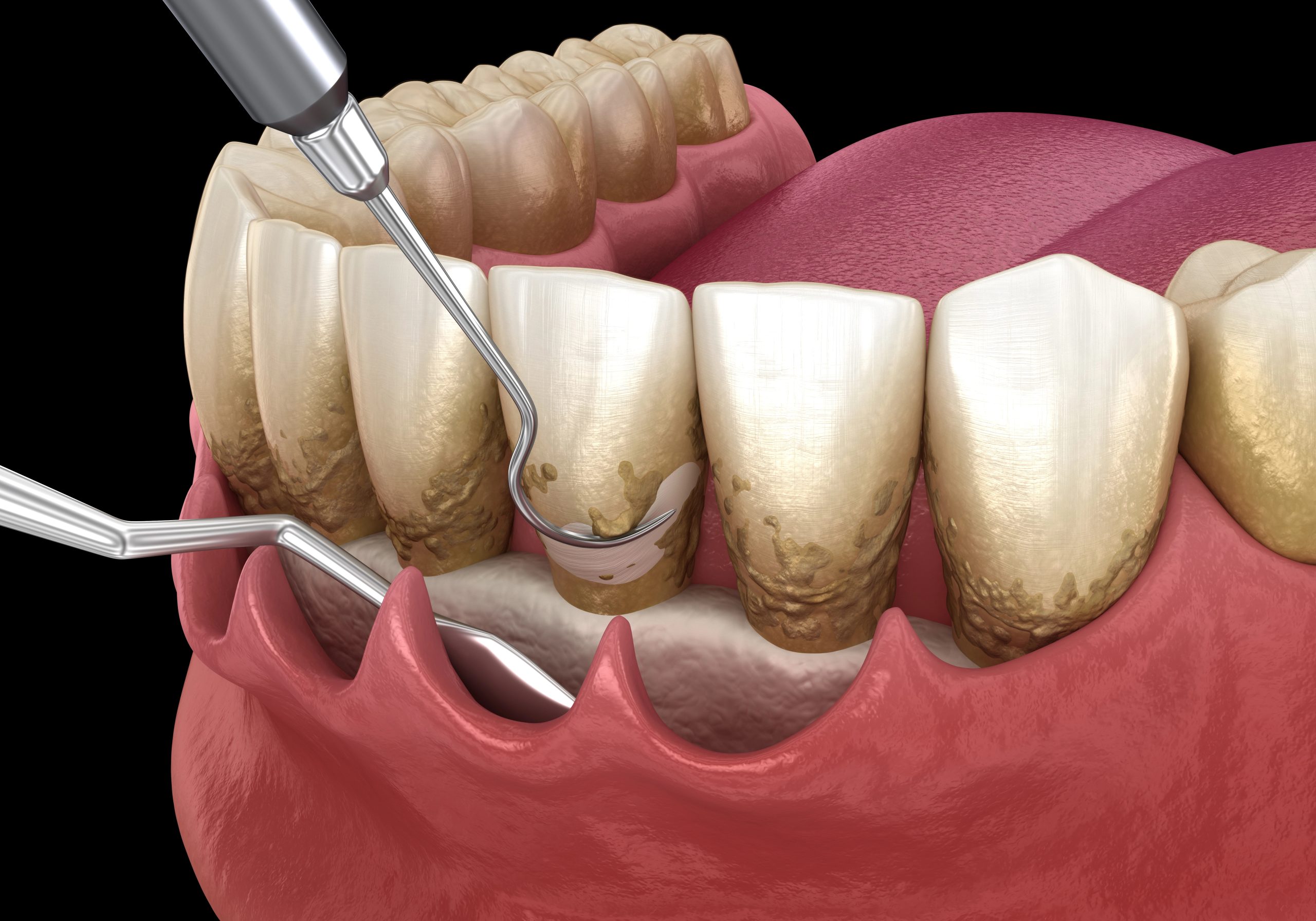
Soft dental plaque builds up on the teeth every day. This is a completely normal process. Plaque forms from bacteria, food debris and saliva. If we remove it regularly with a toothbrush, dental floss or interdental brushes, it usually does not cause major problems.
The problem arises when plaque stays on the teeth too long. It then begins to harden and over time tartar forms. It most often accumulates along the gumline, between the teeth and on the inner side of the lower front teeth, where many people first notice it.
Once dental plaque has hardened, we can no longer remove it with ordinary brushing. No matter how thoroughly we clean our teeth, the tartar will stay there until a dentist or oral hygienist removes it.
How do we recognise tartar?
Tartar does not look the same in everyone. In some people it is lighter and harder to notice, in others it is more yellowish, brownish or greyish. It is often stained by coffee, tea, smoking or food that leaves stronger discolouration.
The most common signs of tartar are:
- a rough feeling on the teeth,
- visible hard deposits along the gums,
- yellowish or brownish deposits,
- bleeding gums when brushing,
- bad breath,
- sensitive or irritated gums,
- a feeling that the teeth are not really smooth even after brushing.
Many people first feel tartar with the tongue. The surface of the tooth is no longer smooth but feels as if there is a layer on it that cannot be removed with a toothbrush.
Why does tartar form?
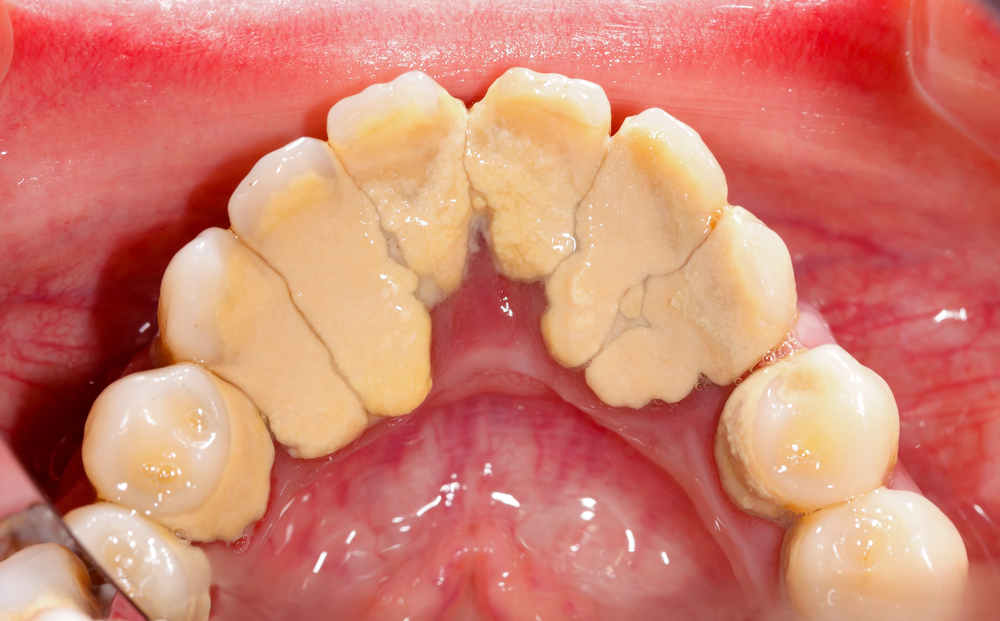
The most common reason is the build-up of soft dental plaque that is not removed well enough during daily cleaning. This does not necessarily mean that we do not brush our teeth. It is often about areas that are harder to reach or that we repeatedly miss when cleaning.
Tartar can build up faster if:
- we do not clean the interdental spaces regularly,
- we brush too quickly or not thoroughly enough,
- we have tightly positioned teeth,
- we wear braces,
- we have bridges, crowns or other prosthetic restorations,
- we smoke,
- we often drink coffee, tea or sugary drinks,
- we have thicker saliva or a dry mouth.
In some people tartar builds up faster than in others. Even if they take care of their oral hygiene, they notice it again after a few months. That is why regular professional cleaning is especially important for such patients. Interested in what tooth polishing is? Read more about teeth polishing.
Why is tartar not just a cosmetic problem?
Tartar first bothers many people because of its appearance. Deposits along the gums, darker edges and the feeling of unclean teeth can be unpleasant, especially when smiling or speaking up close. But what is happening with the gums is even more important.
Tartar has a rough surface, so new deposits and bacteria stick to it even more easily. Because it is often located right next to the gum, it can constantly irritate it. Over time, redness, sensitivity, swelling or bleeding when brushing may appear.
If tartar stays on the teeth too long, it can contribute to:
- gum inflammation,
- frequent bad breath,
- tooth sensitivity,
- receding gums,
- the formation of deeper pockets around the teeth,
- the progression of periodontal disease.
Bleeding gums is not something that should be accepted as normal. If it recurs, it is often a sign that the gums are irritated by plaque or tartar — the NHS guidance on gum disease makes the same point.
| Habit | How often | Why it matters |
|---|---|---|
| Brushing | Twice a day | Removes plaque |
| Flossing | Daily | Cleans between teeth |
| Professional cleaning | Every 6 months | Removes tartar |
Can we remove tartar at home?
We do not recommend it. Advice often appears online on how to supposedly remove tartar at home. People try baking soda, lemon, vinegar, sharp tools or even metal scrapers. Such attempts can damage the enamel, injure the gums or cause additional tooth sensitivity.
At home we can successfully remove soft dental plaque — that is the basis of good oral hygiene. But once the plaque has hardened into tartar, a professional approach is needed for safe removal. A dentist or oral hygienist uses tools designed precisely for this: the deposits are removed accurately, while taking care of the enamel and gums.
How does tartar cleaning work?
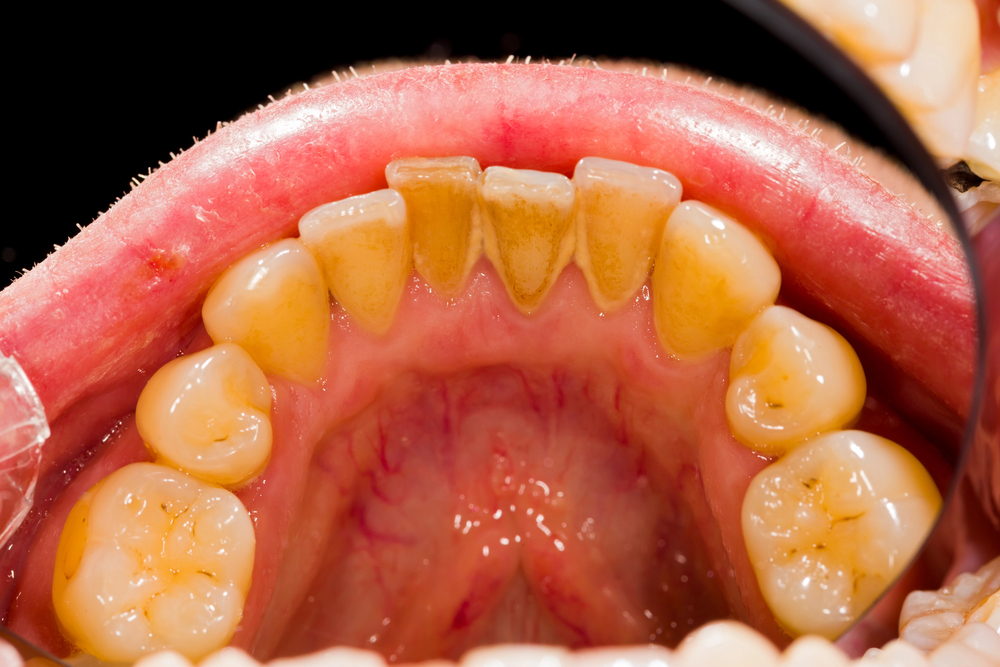
Tartar cleaning is a routine procedure. First the condition of the teeth and gums is examined, then the hard deposits are removed. Special attention is usually paid to the places where tartar most often accumulates: along the gumline, between the teeth and on the inner side of the lower front teeth.
After the tartar is removed, the teeth are polished if necessary. Smooth surfaces are more pleasant to the touch, and new deposits also stick to them less easily. You will often also receive practical advice on how to better clean, at home, those places where tartar builds up fastest.
Does tartar cleaning hurt?
For most people tartar cleaning is not painful. It can be a little uncomfortable, especially if there is a lot of tartar or the gums are already inflamed. If the gums are irritated, they may bleed slightly during or after cleaning — usually no cause for concern, and the condition of the gums often improves once the deposits are removed. The teeth may be more sensitive for a short time afterwards, especially to cold; this usually passes quickly.
How often is it recommended to remove tartar?
The frequency depends on the individual. For some, cleaning once a year is enough; others need it twice a year or more often. This is influenced by how fast tartar builds up, the condition of the gums, the quality of daily hygiene, smoking, tightly positioned teeth, orthodontic appliances, prosthetic restorations and a tendency to gum inflammation.
If tartar builds up quickly for you, it is better to remove it sooner rather than waiting for bigger problems to appear. The less deposit there is, the shorter and more pleasant the procedure usually is.
What to do if you have a lot of tartar?
If tartar has been building up for a longer time, there can be quite a lot more of it on the teeth than it seems at first glance. In such a case it makes no sense to wait, because tartar is not removed by ordinary brushing, and scraping at home with sharp tools is not safe.
The best solution is professional cleaning at a dentist or oral hygienist. With a larger amount of tartar, the hard deposits are removed first, and then the condition of the gums is assessed. After cleaning you will probably feel the difference immediately: the teeth are smoother and easier to clean, the breath can be fresher, and the gums have better conditions to calm down.
If you have a lot of tartar, do not be embarrassed — this is a common problem and the dental team is used to such cases. Do you need an oral hygienist? You can book with our oral hygienist in Ljubljana.
How can we slow the formation of tartar?
We cannot always completely prevent tartar, but we can considerably reduce its formation. We do the most with regular and thorough oral hygiene. It helps if we brush our teeth twice a day and long enough, clean the interdental spaces every day with the right size of interdental brush, do not forget the gumline, use the aids recommended by the oral hygienist, and go regularly for preventive check-ups.
The big difference is often in technique. Many people brush their teeth regularly but always miss the same spots. Once you see where the deposits build up, cleaning at home is much easier too.
When is it time for tartar cleaning?
It makes sense to book a cleaning if you notice hard deposits, a rough feeling on the teeth, bleeding gums or bad breath — or if you have not been to the dentist or oral hygienist for a long time. Tartar will not remove itself, and the longer it stays, the more it can irritate the gums.
Tartar cleaning at OrthoDental
At OrthoDental in Ljubljana we perform tartar cleaning in both dental arches for €60. This is a simple and effective solution if you want to remove hard deposits, improve the feeling in your mouth and take care of healthier gums. After cleaning, the teeth are smoother, the breath can be fresher, and daily hygiene is easier.
Frequently asked questions about tartar
Does tartar go away on its own?
No. Once soft plaque has hardened into tartar, we can no longer remove it with ordinary brushing. Professional cleaning is needed.
Can I remove tartar with a toothbrush?
A toothbrush removes soft plaque, but not hardened tartar. If the deposit is already hard and is not removed by brushing, a visit to the dentist or oral hygienist is needed.
Is tartar dangerous?
Tartar can irritate the gums and contribute to inflammation. If we leave it on the teeth too long, gum problems can worsen.
Why do my gums bleed when brushing?
Bleeding gums is often a sign of inflammation, frequently caused by soft plaque and tartar along the gumline. If the bleeding recurs, it is advisable to have an examination and cleaning.
Does tartar cleaning hurt?
For most patients, no. It can be a little uncomfortable if there is a lot of tartar or the gums are sensitive. Short-lived sensitivity after cleaning usually passes quickly.
How much does tartar cleaning cost?
At OrthoDental, tartar cleaning in both dental arches costs €60.
Related reading
Ready for a cleaner, healthier smile?
Book a dental examination in Ljubljana or Kozina.


Oral cancer: why early detection matters
Learn which mouth changes need prompt assessment, the main oral cancer risk factors and what happens during a routine soft-tissue examination.

Dental crowns | Everything you need to know
What are dental crowns, which materials are available, and how much do they cost? Monolithic zirconia crowns from €500 and layered ceramic crowns from €650 at OrthoDental.

Sensitive teeth | Understanding tooth sensitivity and its causes
Tooth sensitivity can appear when eating hot or cold food. Learn the causes – from enamel erosion to receding gums – and how to relieve it.
