


Make your first visit to the children’s dentist without fear and discomfort.
Clinical review and care: Pia Slana, dentist. General, aesthetic and prosthetic dental care is available in Ljubljana and Kozina.
Children’s fears are caused by stories they hear from their classmates, parents, and grandparents. This makes it all the more important that the first visit to the children’s dentist is a positive experience. At OrthoDental, the well-being of children in the dental clinic is our top priority.
Who is a pediatric dentist?
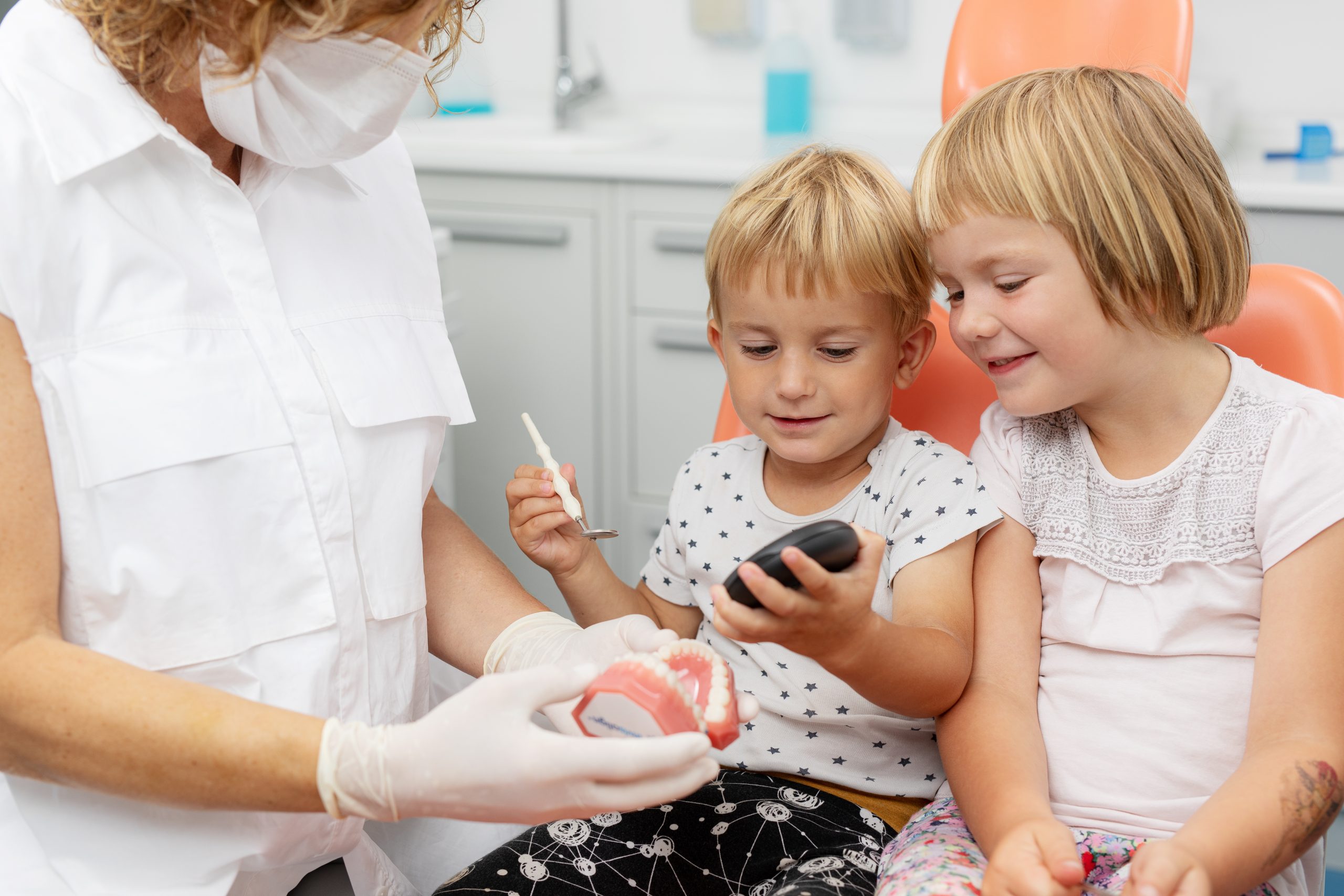
A pediatric dentist focuses on providing dental care for children from infancy to adolescence. The best dentist for children is one who understands the unique needs of the child and is able to approach them in a way that makes visiting the dentist a pleasant experience. With the right approach, fear of the dentist can be avoided from a young age.
The OrthoDental self-pay pediatric dentist always makes sure to create a comfortable and stress-free environment and uses child-friendly language and an approach that gradually prepares the child for the procedure. Given our experience and qualifications, we are also the right choice for children who feel anxious about visiting the dentist, as we will approach them in the right way and help them overcome their fear.
What does the first visit to the children’s dentist look like?
The first visit to the dentist usually involves getting to know the dentist, talking about and demonstrating the appliances and procedures in a child-friendly way. The dentist discusses with the parents the child’s medical history and any medications they may be taking.
If possible and if the child cooperates, the dentist will examine the child’s teeth, gums, and mouth to detect any signs of decay, gum disease, or other dental problems in time. At the last part of the visit, the dentist shows both the child and the parents brushing and flossing techniques and makes recommendations for maintaining good dental health.
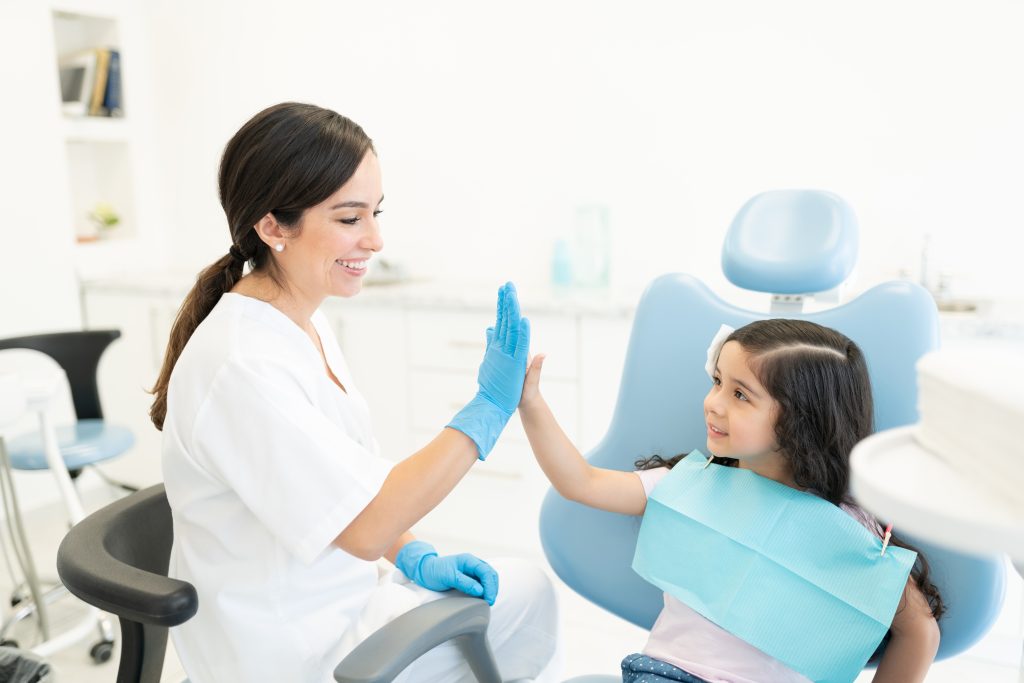
Each child is a world of its own – and that’s how we approach treatment.
We understand that every child is different, so we take the time to get to know each of our patients individually. Our pediatric dentist is trained to work with children of all ages, including those with special needs. We strive to make pediatric dentistry a positive experience for your child, helping to promote a lifetime of good oral health and gum tissue.
Why is pediatric dentistry important?
Regular visits to the dentist during childhood are important for many reasons and are essential for healthy tooth development and good oral hygiene. Parents are the ones who can schedule regular dental check-ups for their children and encourage them to take an active role in taking care of their dental health.

Preventing dental problems.
Regular dental check-ups can help prevent dental problems such as tooth decay, gum and gum disease, and calculus build-up. Early detection of dental problems can also prevent the need for more extensive and expensive dental procedures in the future.

Early detection of orthodontic problems.
Regular visits to a pediatric dentist can help detect orthodontic problems such as misaligned teeth or jaw growth problems. Early detection of these problems can help prevent the need for more extensive orthodontic treatment later on.

Education on good oral hygiene.
Regular visits to the dentist are an opportunity for children to learn good oral hygiene, such as brushing and flossing, and the importance of a healthy diet for dental health.

Monitoring tooth development.
The pediatric dentist will monitor the development of your child’s teeth and jaw in a comprehensive way. This is important to identify problems that could affect future dental health.
Establishing positive attitudes towards dental procedures.
We always do our best to help children develop a positive attitude towards dental procedures and help them overcome any fears or anxieties they may have by making their visit to the dentist a pleasant one. This encourages good dental habits for life.
Book an appointment for your child
What dental problems can children have?
Children can have a variety of dental problems, some of which are unique to their age group, for example:
- Tooth decay: Tooth decay, also known as cavities, is a common dental problem in children. It occurs when bacteria in the mouth produce acids that erode tooth enamel and cause a hole in the tooth.
- Gum disease: gum disease is caused by the build-up of calculus on the teeth and gums. Symptoms may include red, swollen gums that bleed easily.
- Tooth sensitivity: children may experience tooth sensitivity due to a variety of factors, including tooth decay, receding gums, or enamel erosion.
- Misaligned bite: This refers to misalignment of the teeth or jaw, which can affect the child’s bite and overall dental health.
- Thumb vacuuming: Prolonged thumb vacuuming or pacifier use can cause dental problems, including misaligned teeth and bite problems.
- Tooth injuries: children can suffer tooth injuries from accidents or sports injuries, which can lead to a broken or knocked-out tooth.

How to prepare your child for the first visit?

The most important thing is to explain to your child at home in a positive and reassuring way what will happen during the visit to the dentist. Use age-appropriate language and avoid using negative or scary words. Reading books about going to the dentist can also help to bring children closer to the dental check-up and make them feel more comfortable.
One very effective approach is role-playing. Pretend you are the dentist and let your child play the patient. This can help your child to become familiar with what will happen during the visit. Allow the dentist and the dental team to take the lead during the visit as they are trained to work with children and help them feel relaxed.
A good first experience with a dentist is of utmost importance.
A child who has a good experience with the dentist the first time will not be afraid to visit again later. At OrthoDental, therefore, a large part of the first visit usually consists of “chair preparation”, which means that the pediatric dentist works with the child for 15-20 minutes, animating him, explaining everything that is going to happen, and, above all, it is important that nothing is done by force.
Send an application
Book an appointment now!
When is the right time to visit the dentist for the first time?
We recommend that your child visits the dentist for the first time when his first tooth grows in, or no later than his first birthday. This may seem early, but visiting the dentist at an early age can help prevent dental problems and tooth decay. It is important to realize that even when the first teeth are growing, the child is already acquiring habits that can be harmful, such as excessive sucking of fingers or pacifiers, drinking sugary liquids by the bottle, as well as inadequate dental hygiene.
The first visit to the dentist is for parents so that we can help you and your child establish good oral hygiene habits and teach them how to care for their teeth properly.
Dental check-up for your child

Did you know we’re TikTok stars?
Take a look at our fun content, it might just be the one that convinces your little ones to come for a check-up.

Does your child need a compassionate dentist?
Book your little ones in for a check-up at OrthoDental! You won’t regret it, because, with the help of our qualified team, your child will overcome their fear in no time.

Book an appointment
for your little ones’ dental check-up.
Frequently asked questions
When should my child visit the dentist for the first time?
Your child should have his or her first visit to the dentist when the first teeth grow in, or no later than the child’s first birthday.
How often should my child have dental check-ups?
Children should have dental check-ups every six months, or more often if recommended by their dentist.
Is it necessary for children to have dental X-rays?
Dental X-rays may be needed to detect dental problems that are not visible during a visual examination. The frequency of X-rays depends on the health of the child’s teeth and risk factors.
Yes, children can get cavities, especially if they have poor oral hygiene habits or consume sugary foods and drinks.
How can I help my child maintain good oral hygiene?
Parents can help their children maintain good oral hygiene by encouraging them to brush and floss daily and limiting their intake of sugary foods and drinks. When the child is younger, parents should ensure that the teeth are brushed.
When should my child start using fluoride toothpaste?
Children can start using fluoride toothpaste when they are able to spit it out, usually around the age of 2.
Should my child use mouthwash?
Mouthwash for children is not necessary in most cases, but a children’s mouthwash can be used if recommended by the dentist.
What should I do if my child has a dental emergency?
If your child has a dental emergency, such as a knocked-out tooth or severe pain, the on-call pediatric dentist can help.
